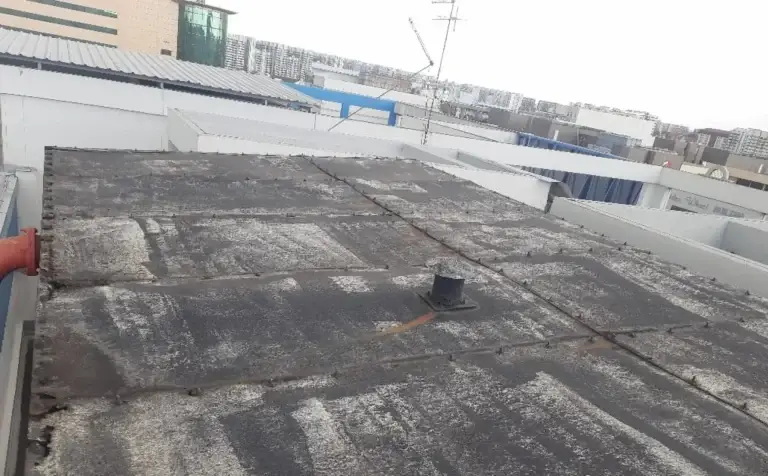
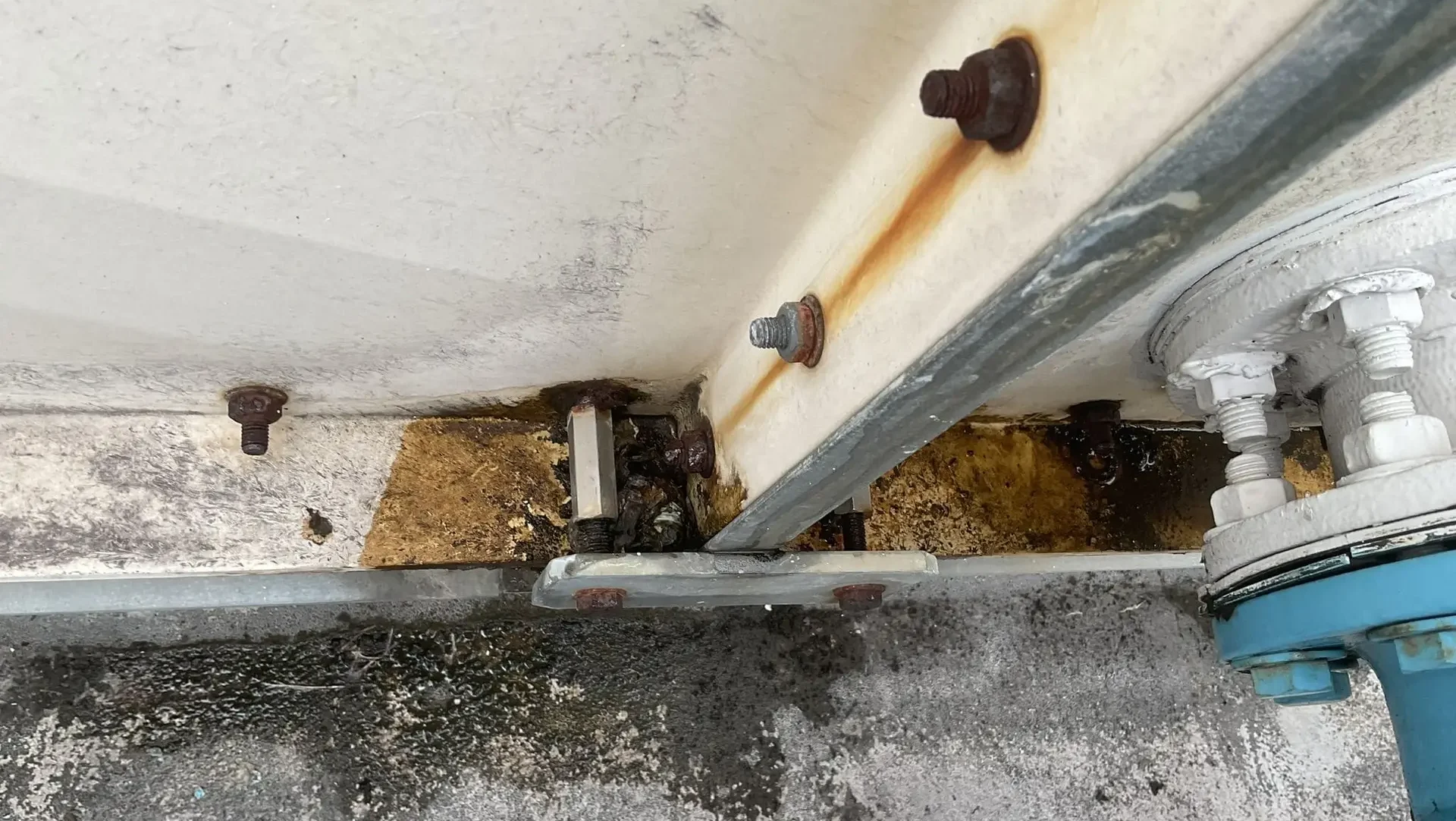

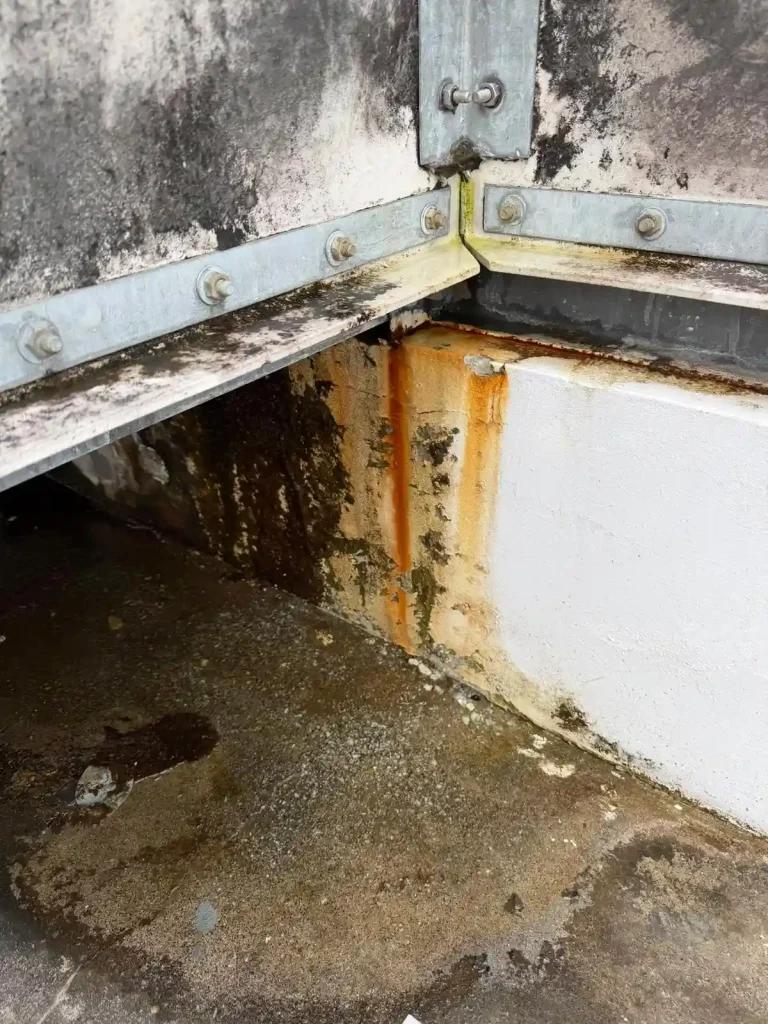
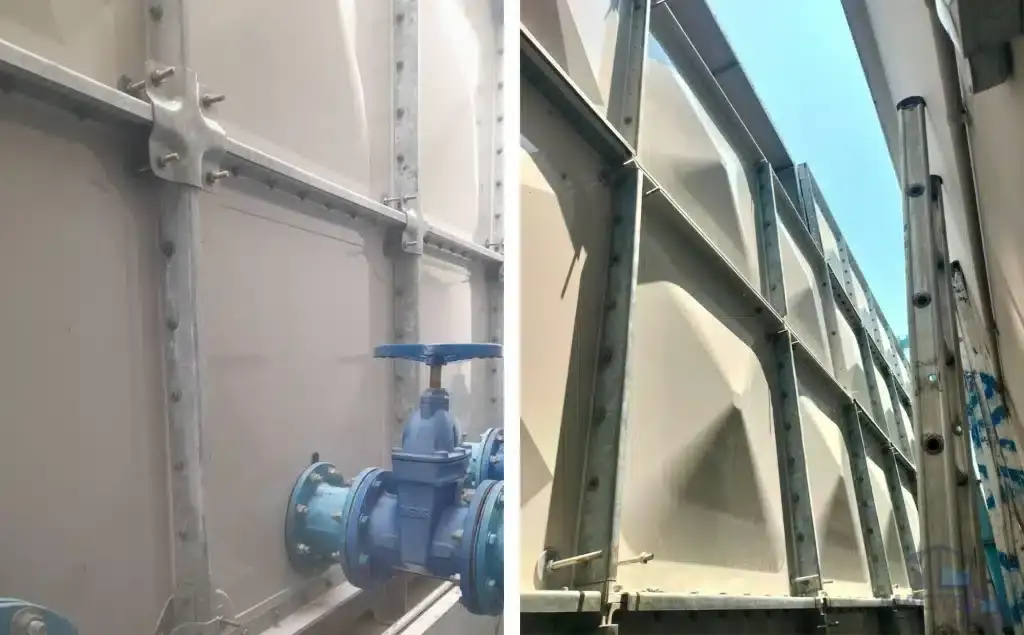
Then close-ups. The exact joint, bolt line, panel or fitting. Get as close as you safely can. On a sectional tank the three things we are looking for are a cracked panel, a bolt line with rust or missing nuts, and a joint where the sealant or foam gasket has failed and water is weeping through the seam.
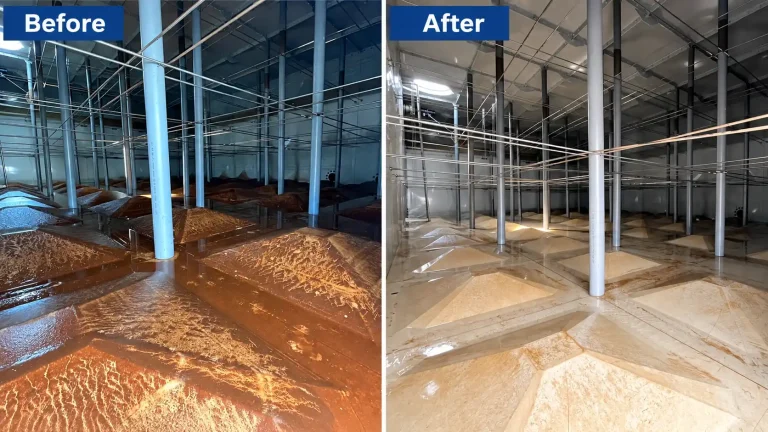
Then the inside, if there is safe access. Only if you can open the manhole without entering the tank. A photo down into the compartment shows the water level, the condition of the internal bracing and whether there is sediment or corrosion. Never enter a tank without specialised personals.
Send all of this to us on WhatsApp or email with the building address, the tank’s approximate size, what it supplies, and whether the other compartment is in service. If the leak is one of the common ones and the videos show it clearly, our team can often send you a quotation to proceed on straight away. If it is not clear, or the tank is old, we arrange a site visit and inspect it properly. Our published policy is the same either way: photos first, then we decide whether a visit is needed. We attend emergencies around the clock; out-of-hours attendance may carry an additional charge.
What usually causes a sectional panel tank to leak
Knowing this helps you read your own photos.
- Failed sealant or foam gasket at a joint. The seam between two panels is sealed with a foam gasket or butyl sealant, compressed by the bolts. It ages, hardens, or was never compressed evenly. Water weeps along the joint rather than from one point. This is the most common leak and, on a tank in otherwise good condition, the simplest repair: open the joint, replace the gasket, re-bolt.
- Rusted or loose bolts and nuts. On older tanks the bolts corrode, lose their clamping force and the joint opens. This is also the start of a chain we see over and over: rusted bolts let the joint move, the movement damages the internal bracing, and the stressed panels crack. Replacing bolts early is cheap. Replacing panels because the bolts were ignored is not.
- A cracked panel. Most often the base panel, which carries the full head of water, with hairline cracks in the side panel directly above it. These are repaired by replacing the panel, and usually the base and the adjacent side panel are replaced together, because dismantling the side to reach the base can make it worse. A base or partition-base panel on a two-compartment tank needs both compartments drained to replace.
- A leaking fitting or flange. Inlet, outlet, overflow, drain, float valve. Often mistaken for a tank leak. Usually a gasket or a cracked short pipe.
- Pinholes in the panel surface. Found after a tank is cleaned, on both FRP and galvanised panels. Patched with epoxy if the panel is otherwise sound.
If a leak has been going on for years and only just became urgent, be ready for the inspection to find more than one of these.
Why a DIY or general-worker repair usually costs more
We understand the instinct. A leak looks simple, the maintenance team is on site, and a specialist costs money. We have been called in after enough of these attempts to be direct about where they go wrong.
- Sealant on the outside does not fix a joint. The leak is between the panels, under compression. Smearing silicone along the seam from outside holds for a week, traps water in the joint, and has to be cleaned off before the joint can be properly resealed.
- Over-tightening cracks panels. Bolts on a sectional tank are torqued to compress the gasket evenly. A general worker with a spanner, tightening until the drip stops, splits FRP panels and distorts steel ones.
- Draining the wrong way. A tank that has not been emptied in ten years is being held together partly by the water pressure pushing every joint tight. Drain it to fix one leak and three more appear when it is refilled. This is normal and we plan for it. An untrained team does not, and the building is now without water and with a worse tank.
- Wrong parts. Bolts need to be the right grade and length for the panel and the water. Gaskets need to be the right profile for the panel brand. Mixed or undersized hardware is a repair that fails again in months.
- Safety. A tank is a confined space and the top of it is a working-at-height location. Sending a general worker in without the training, ventilation and permits is a risk to the person and to the building’s liability.
The pattern is the same each time: the quick fix costs little, fails, and then a specialist team has to undo it before doing the repair that should have been done first. The second bill is bigger than the first bill would have been.
What a proper leak repair looks like
For a tank that is worth repairing, the work is methodical.
- Inspect with water in the tank. We prefer to see the leak live. It tells us which joint, how fast, and whether the bracing has moved.
- Isolate the compartment and bring the level down only as far as the repair needs.
- Repair the cause, not the symptom. Replace the foam sealant or gasket at the leaking joints. Replace rusted bolts and nuts, swapped individually so the joint stays clamped. Tighten loose bolts to the correct compression. Replace cracked panels. Patch pinholes with epoxy. Where a panel is structurally weakened, laminate it with fibreglass mat inside and outside.
- Refill and leak-test. The refill is the test. We stay until it holds.
- Photograph before and after. You get the record, which you will want for the MCST or the owner.
We will also tell you when a repair is not the right answer. A crack that runs under the angle bar cannot be fully reached. An old tank with panels from a make that no longer exists may have no replacement parts. On tanks like that, repair work itself can open new cracks, and some seepage at the corners after a repair is normal and tightens up over the first days. We say this before quoting, not after. Our repair warranty covers the repaired area, and if the honest answer is that the tank has reached the end of its life, we will say so and quote a replacement instead, done compartment by compartment where the tank allows it so the building keeps its water.
After the repair
A leak is usually a sign of age, not a one-off event. Two things to put in the diary.
- Have the tank looked at properly. If the bolts on one joint were rusted, the bolts on the other joints are the same age. Ask for a condition report on the whole tank, not just the leak, and budget from that.
- Keep the annual inspection honest. Building owners and MCSTs must have the their domestic tank inspected, cleaned where necessary and certified by a PUB Licensed Plumber every twelve months. The cleaning contractor is inside the tank once a year. Ask them to photograph the bolts, bracing and panel surfaces while they are there. It is the cheapest early warning you will get. We do not carry out cleaning ourselves, but we can recommend the cleaning partners we work with.
Why building managers call Magtech
Magtech has supplied, installed and repaired sectional panel water tanks in Singapore since 1995, with over 35 years of experience in the trade. We are the sole Singapore distributor of SUNNIK tanks, and over the years we have worked on sectional tanks from many other manufacturers, including older Japanese and local makes that are no longer on the market, where parts have to be matched or modified rather than ordered. That is the experience a leak repair actually needs: knowing which brand’s gasket profile fits, which legacy manhole does not match a modern cover, and when a tank is past saving.
If you have a tank leaking now, take the photos and videos described above and send them to us. We will tell you what it is, whether it needs a visit, and what we recommend.