Start with what is actually in Singapore tap water
PUB publishes its sampling results every year. These are the figures for January to December 2025, taken across the network.
| What PUB measures | Average | Range | What it means in the kitchen |
|---|---|---|---|
| Monochloramine (disinfectant) | 2.10 mg/L | 1.29 – 2.70 | The taste and smell most people notice. Kept in the water on purpose so it stays safe through the pipes. |
| Total dissolved solids | 116 mg/L | 63 – 542 | Minerals and salts. Low. Bottled mineral water is often higher. |
| Total hardness (as CaCO3) | 42.7 mg/L | 7.24 – 191 | Soft water. Kettles do not scale the way they do in Europe or China. |
| pH | 8.0 | 7.5 – 8.9 | Slightly alkaline, well inside the limit. |
| Lead | below 0.5 µg/L | — | Below the lab’s detection limit. The limit is 10. |
| Iron | 0.009 mg/L | 0.003 – 0.043 | Clear water at the mains. Rust, where it appears, comes from pipes inside buildings. |
| E. coli | below 1 per 100 mL | — | None detected. |
Two things stand out. The water is soft and low in dissolved solids, so there is nothing for a mineral-stripping filter to strip. And the one thing a filter can visibly change is the disinfectant taste.
PUB’s position is that tap water is safe to drink straight from the tap without further filtration. PUB also warns that a filter which is not cleaned or replaced regularly can become a breeding ground for bacteria. Both statements are right, and any filter you buy should be judged against them.
Why does Singapore water taste of chlorine?
Strictly, it is chloramine, not chlorine. PUB disinfects with chlorine or ozone at the waterworks, then adds ammonia before the water leaves. Chlorine and ammonia together form chloramine, which is longer-lasting than chlorine on its own and keeps the water protected through kilometres of mains. The 2025 average of 2.10 mg/L monochloramine is what you taste.
This matters when you choose a filter. Chloramine is harder for a carbon filter to remove than plain chlorine. It needs more contact time and the right grade of carbon. A cheap jug filter that handles chlorine well can leave most of the chloramine behind. We cover this in detail in our article on chloramine in Singapore tap water.
What happens between PUB and your tap
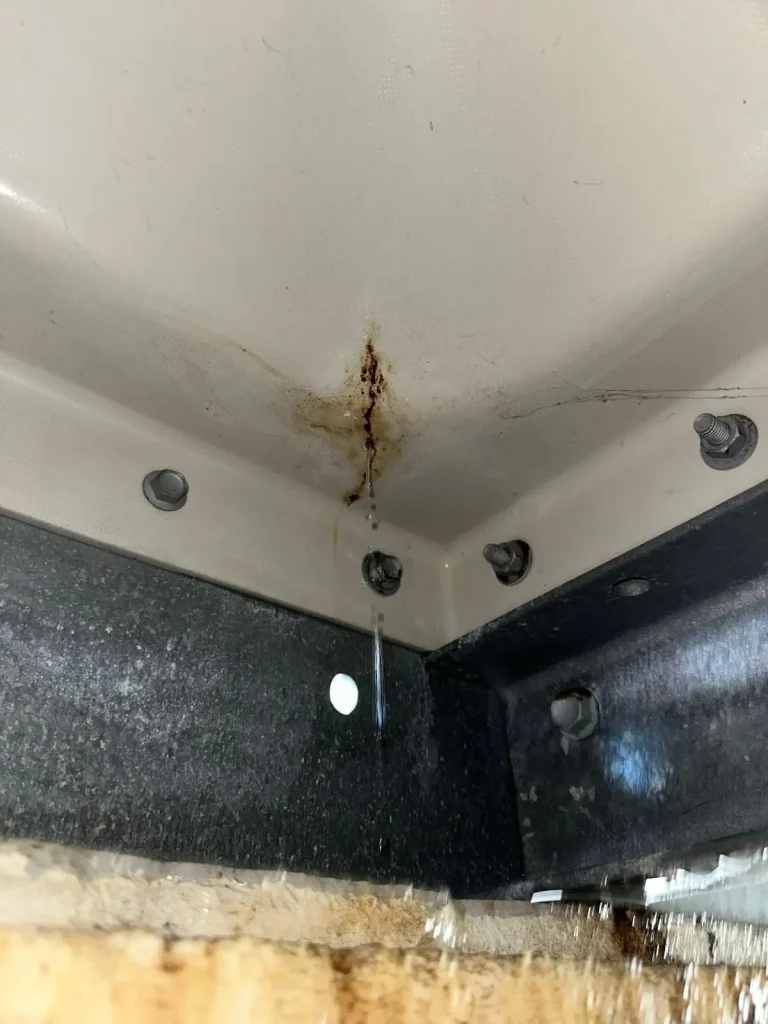
PUB’s responsibility ends at the water meter. From there the pipes, the storage tank and the taps belong to the building owner. In a well-maintained building the water at the kitchen tap is the same water PUB tested. In a neglected one it has sat in a tank that was last cleaned years ago, or run through galvanised iron pipes that are rusting from the inside.
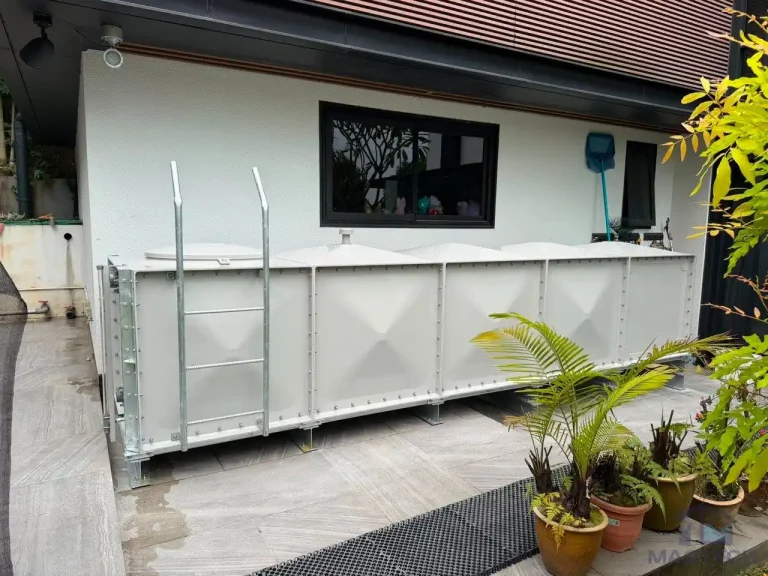
This is the part of the picture we know best. Magtech has supplied and installed water storage tanks in Singapore since 1995, and we have opened a great many of them. The honest summary is that the water PUB delivers is excellent, and what happens to it afterwards depends on the owner. A point-of-use filter at the kitchen tap is the last line after the tank and the pipes, and that is the only reason a tank company sells one. Our article on Singapore tap water explains the tank rules and where landed houses sit in them.
The three filter types, side by side
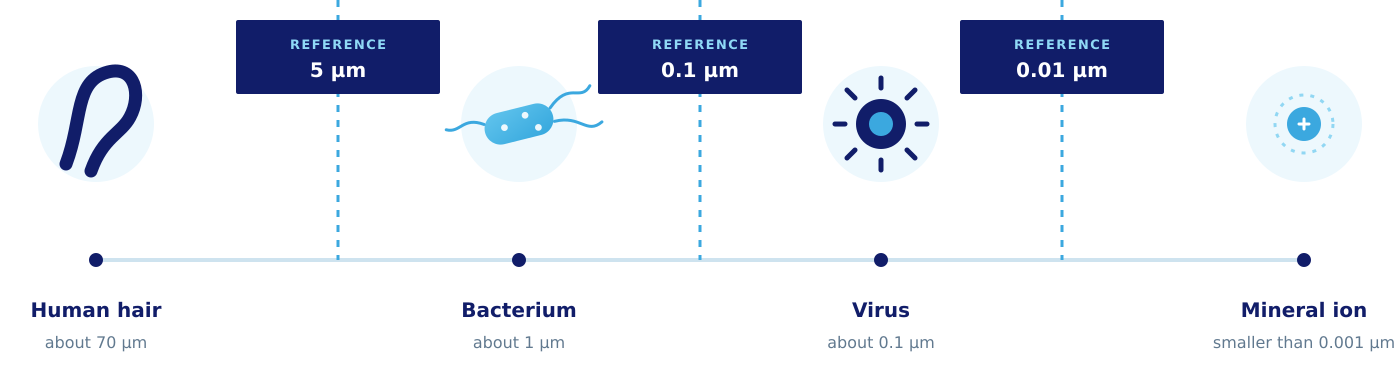
Every filter is a sieve, a sponge, or both. The number that matters is the pore size in microns, where one micron is a thousandth of a millimetre. A human hair is about 70 microns. A bacterium is about 1 micron. Most viruses are between 0.02 and 0.3 microns. Dissolved minerals are smaller still.
| Ultrafiltration (UF) | Reverse osmosis (RO) | Hot & cold dispenser | |
|---|---|---|---|
| Pore size | about 0.01 micron | about 0.0001 micron | usually UF or carbon inside |
| Removes | sediment, rust, chloramine taste (with a carbon stage), bacteria, most viruses | all of that plus dissolved minerals, salts, heavy metals, fluoride | depends on the cartridges inside; most are UF plus carbon |
| Keeps the minerals | yes | no | usually yes |
| Needs electricity | no | yes, for the pump | yes, for heating and cooling |
| Needs a drain | no | yes, for reject water | no |
| Waste water | none | typically one to three litres to the drain per litre produced | none |
| Flow | 2 litres a minute or more at mains pressure | slower unless the unit has a large pump; smaller units use a storage tank | limited by the heater and chiller |
| Where it lives | under the sink with its own tap, or on the counter | under the sink, with the drain and a power point | on the counter or floor-standing |
| Running cost | cartridges only | cartridges, a membrane, electricity, water | cartridges, electricity, and a heater and chiller to service |
| Certification to look for | NSF/ANSI 42 for taste and odour; 53 if it claims health contaminants | NSF/ANSI 58 for the complete system | the cartridge standard, plus electrical safety for the heater |
Ultrafiltration
A UF membrane at 0.01 micron stops everything down to bacteria and most viruses, and lets dissolved minerals through. Paired with a sediment stage in front and a carbon stage for the chloramine taste, it is a complete answer for water that is already clean. It runs on mains pressure, so there is no pump, no power point, no drain and no reject water. The cartridges are the only running cost, and the customer can change them.
The limitation is the one it is designed around: it does not change what is dissolved in the water. For Singapore’s soft, low-TDS supply, that is not a limitation at all.
Reverse osmosis
RO forces water through a membrane so fine that dissolved salts cannot pass. It is the right technology for hard water, high dissolved solids, heavy metals or agricultural contamination. It is also the most expensive to own: a pump, a power point, a drain line, a membrane to replace, and one to three litres of reject water for every litre you drink. Because it strips the minerals, RO water tastes flat to many people, and manufacturers often add a remineralising stage to put some back.
In Singapore the dissolved solids are already around 116 mg/L and the lead and iron figures are near zero at the mains. RO takes a problem that does not exist and solves it thoroughly. It still has a place: overseas, in places with hard or untreated water, and in the occasional older building where the owner wants the strongest possible barrier against very old internal pipework. For a typical Singapore kitchen it is more machine than the water needs.
Hot and cold dispensers
The dispensers in every showroom are appliances first and filters second. Inside most of them is a UF or carbon cartridge set, which is sensible for Singapore water. What you are paying for is the heater, the chiller and the convenience of instant hot water for formula and tea. If that convenience is what you want, buy it for that reason, and read the cartridge specification the same way you would for an under-sink unit. The filtration is the same technology in a bigger box with a power cord.