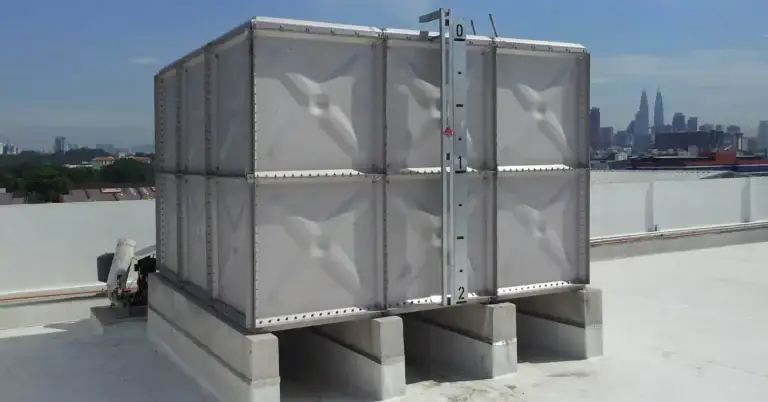
Client Notice

Pricing update from October 2026: Revised pricing will apply due to continued increases in material, manufacturing and logistics costs.
Tank Types & Materials
Water Solutions Insight #14

FRP vs GRP vs SMC Water Tanks: What’s the Difference?

FRP and GRP are two names for the same fibreglass sectional tank — SMC is the panel material they’re made from. A Singapore tank specialist explains all three.

SK

Written by

Seah Kevin

Sales Manager, Magtech General

Short answer: FRP and GRP are two names for the same product — a sectional water tank made from fibreglass-reinforced panels. FRP (Fibreglass Reinforced Plastic) is the usual term in Singapore; GRP (Glass Reinforced Plastic) is more common in Malaysia, Cambodia and the Philippines. SMC (Sheet Moulding Compound) is different: it is the raw material the panels are hot-press moulded from, not a type of tank.

If you have received two quotations — one for an “FRP water tank” and one for a “GRP water tank” — you are not comparing two different products. And if a specification calls for “SMC panels”, every quality FRP/GRP sectional tank on the market already uses them.

This article explains what each term actually refers to, so you can read specifications and quotations without the terminology getting in the way.


Are FRP and GRP water tanks the same thing?

Yes. FRP (Fibreglass Reinforced Plastic, sometimes Fibre Reinforced Polymer) and GRP (Glass Reinforced Plastic) describe the identical composite material: polymer resin reinforced with glass fibre. Which term appears on a drawing usually depends on where the specification was written.

  • Singapore: “FRP water tank” is the common term.
  • Malaysia, Cambodia, the Philippines: “GRP water tank” appears more often.
  • British and European documents: typically GRP.

Magtech has installed these tanks for over three decades across Singapore, Malaysia, Cambodia and the Philippines — the tank on the lorry is the same regardless of which name is on the paperwork.


What is an SMC water tank?

SMC stands for Sheet Moulding Compound — a ready-to-mould composite sheet combining polymer resin, glass fibre reinforcement, fillers and additives. It is the material the tank panels are made from, not a separate category of tank.

So when a supplier says “SMC water tank”, they mean an FRP/GRP sectional tank whose panels are hot-press moulded from SMC. The three terms describe the same product at different stages:

TermFull nameWhat it refers to
SMCSheet Moulding CompoundThe panel raw material and the moulding process
FRPFibreglass Reinforced PlasticThe finished composite material / tank
GRPGlass Reinforced PlasticThe same finished product, alternative regional term

The most complete description you will see in a specification is “hot-pressed SMC FRP/GRP sectional panel water tank” — every part of that phrase is describing one product.


How are SMC panels manufactured?

Panels are formed in a hot press: the SMC sheet is compressed in a matched steel mould under controlled heat and pressure. This matters for more than consistency:

  • Dimensional accuracy. Pressed panels are uniform, so bolt holes align and joints seal properly on site. A sectional tank is only as watertight as its panel geometry.
  • Consistent strength. The fibre content and cure are controlled in the press, panel after panel — unlike hand-laid fibreglass.
  • Convex profile. Panels are moulded with a convex face that handles water load efficiently, with a concave draining floor panel so the tank can empty fully for cleaning.

On site, the panels are bolted together with food-grade sealant at every joint to form the complete tank — which is what makes sectional tanks practical in Singapore plant rooms and rooftops where a one-piece tank could never be brought in.

Hot press machine
The photo shown on the right is an example of a hot press machine used in the manufacturing process of SMC tank panels.

Why are FRP/GRP sectional tanks so widely used?

  • No corrosion. The composite cannot rust — no coatings to maintain and no metal contact with the stored water.
  • Hygienic for potable water. Quality panels have zero light penetration, which prevents algae growth, and the sealant used is food-grade.
  • Lightweight, modular installation. Panels are carried in by hand through normal access routes — no crane, and the tank can be built around site obstacles.
  • Sized to the site. Capacity is configured from standard panel modules, so the tank is made to fit the space and the demand.
  • Repairable panel by panel. A damaged panel can be replaced individually rather than replacing the whole tank.
  • Long service life. FRP/GRP sectional tanks typically serve 15–20 years in Singapore conditions, subject to water quality and annual maintenance.


Are FRP/GRP tanks approved for drinking water in Singapore?

Yes — in fact, for sectional panel tanks they are the required choice. Since 1 June 2019, only FRP/GRP sectional tanks tested for compliance with SS 245:2014 may be supplied and installed for potable water service in Singapore, under PUB’s water storage tank requirements. The SUNNIK tanks we install are SS 245:2014 certified, WRAS approved for potable contact, and GREENGUARD Gold certified.

Two related points worth knowing:

  • Where stainless steel is used for potable storage instead, PUB requires minimum Grade 316 — see our guide to [SS304 vs SS316 stainless steel tanks].
  • Internal ladders in a potable FRP tank must be FRP or SS316 — aluminium internal ladders are not PUB-approved. It is a small line item that catches out non-specialist quotations.


What are FRP/GRP tanks used for?
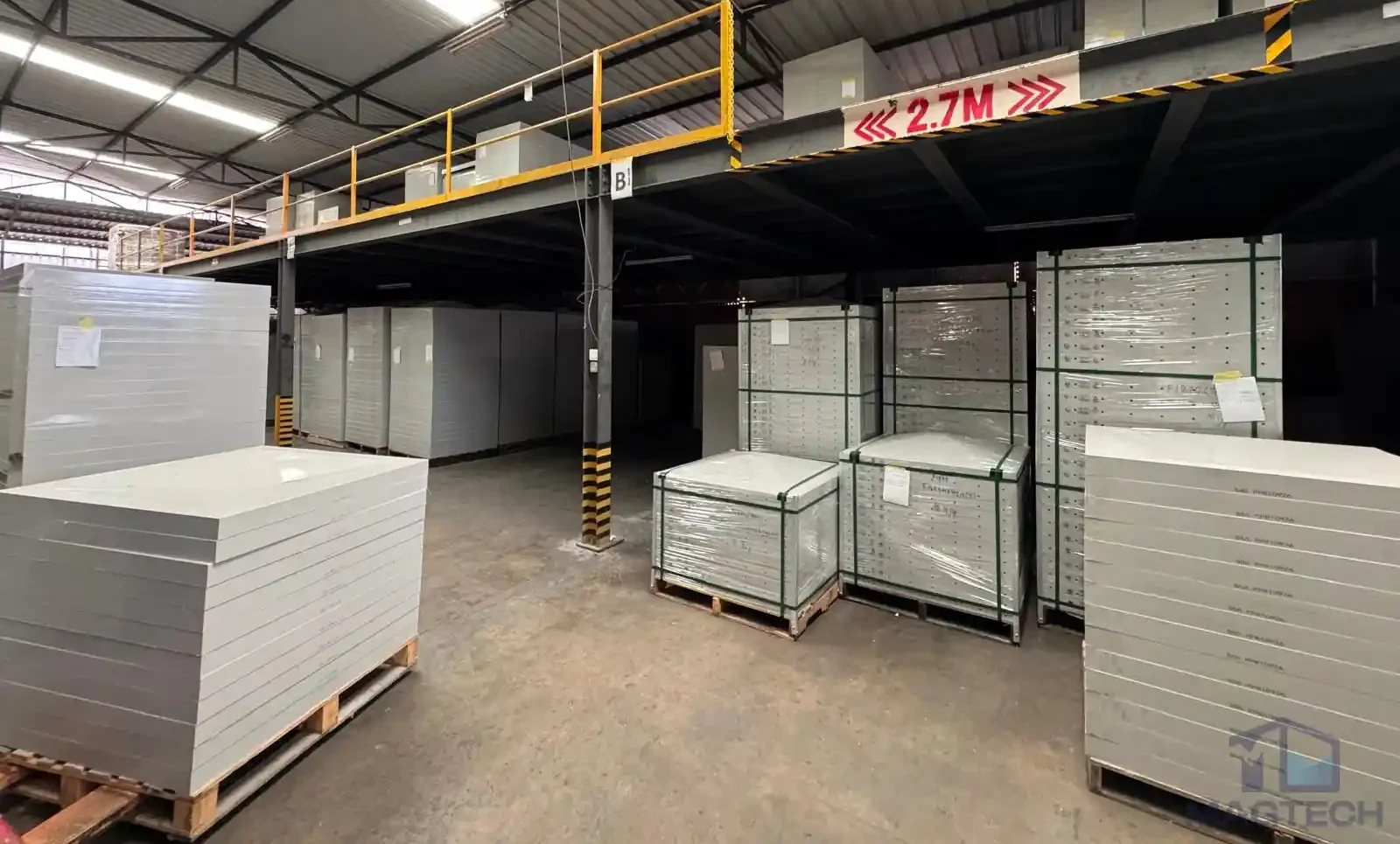
What Is an FRP Water Tank? - GRP FRP tank panels stored before installation

Typical applications across our 4,000+ projects: potable and domestic water storage in residential and commercial buildings, rooftop and transfer tanks, rainwater harvesting, process water, and chilled water and expansion tanks — for which insulated panels (25mm or 50mm insulation as standard) hold temperature stably. If your application needs a non-standard build, contact us with the requirement.

For fire protection tanks, specifications in Singapore are written around pressed steel rather than FRP — see our [HDG pressed steel tank] page.

For a more detailed comparison of their applications, standards, lifespan and maintenance requirements, read our guide to [HDG pressed steel vs FRP water tanks in Singapore].


Which term should you use?

Follow the project specification. If the drawing says GRP, quote GRP; if the client’s consultant writes FRP, use FRP — you are describing the same tank either way, and consistency with the specification avoids confusion at submission stage.

What actually differentiates one tank from another is not the acronym. It is the panel quality, the compliance certificates behind it, the design of the bracing and fittings, and the crew that installs it. Judge quotations on those.


Talk to a specialist, not a search result

If you are specifying, replacing or comparing quotations for a sectional panel tank, send us the drawing or a photo of the existing tank. We will tell you plainly what the specification means and what it should cost to do properly.

+65 8700 1377 · admin@magtechgeneral.com.sg

Magtech General Construction & Trading Pte Ltd — sole Singapore distributor of SUNNIK sectional panel tanks. Established 1995, 35+ years of experience, 4,000+ projects.
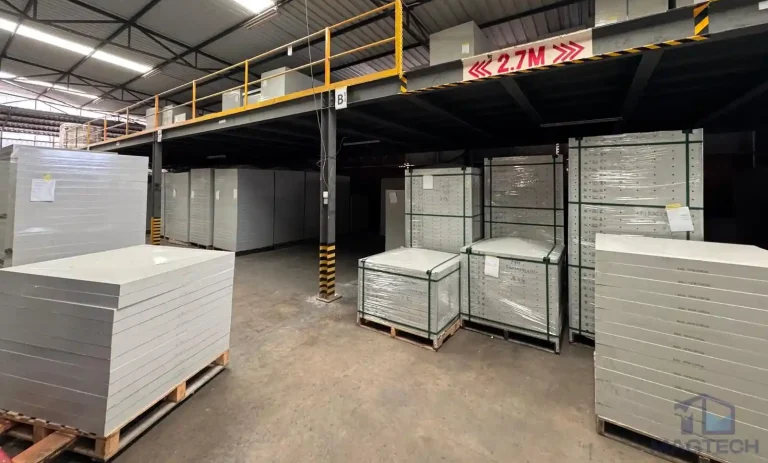
Water tank assessment

Not sure how much life your tank has left?

Send us photographs of the tank and installation area, or arrange a site assessment.

Recent Posts

Need project advice?

Discuss Your Water Tank Requirements

Our team will respond within 24–48 hours.

Frequently asked questions

Tank Types & Materials Questions

Neither — they are the same product under two names. FRP is the usual term in Singapore, GRP elsewhere. Compare tanks on certification (SS 245:2014, WRAS), panel quality and installation workmanship instead.

SMC is not a type of tank at all — it is the moulding compound that FRP/GRP panels are hot-pressed from. A quotation for an “SMC tank” and one for an “FRP tank” are describing the same construction.

Yes. Since 1 June 2019, sectional panel tanks for potable service in Singapore must be FRP/GRP tested to SS 245:2014. Our SUNNIK tanks are SS 245:2014 certified and WRAS approved.

Typically 15–20 years in Singapore, subject to water quality and annual cleaning and inspection by a licensed contractor. Individual panels can be replaced along the way, which often extends the practical life of the installation.

Material and application. FRP/GRP is the potable-water workhorse; hot-dip galvanised pressed steel is the default for fire protection tanks; stainless steel serves high-specification and potable applications. The application usually dictates the material in Singapore.

Continue reading

Related Industry Insights