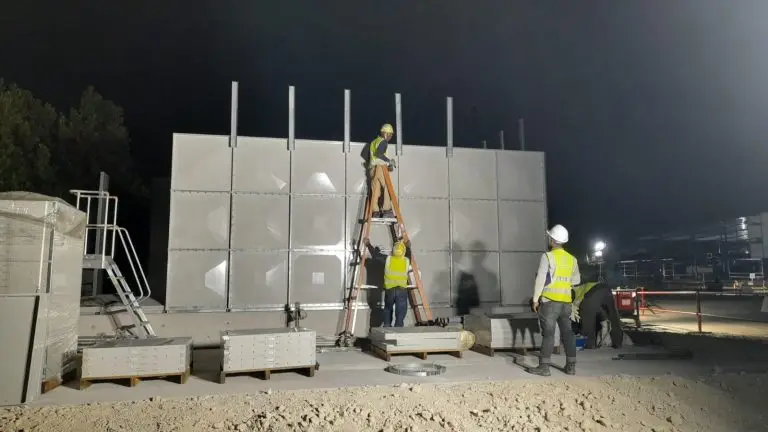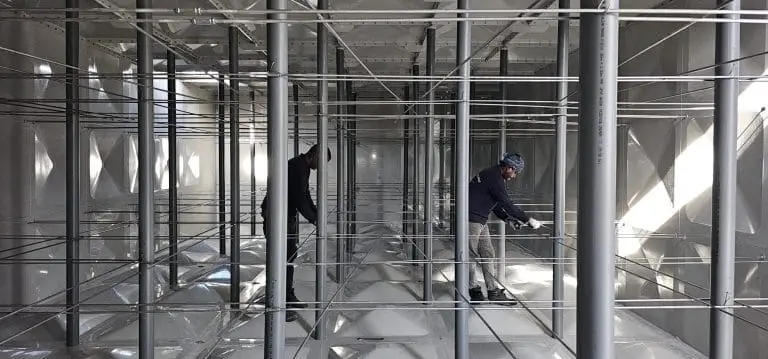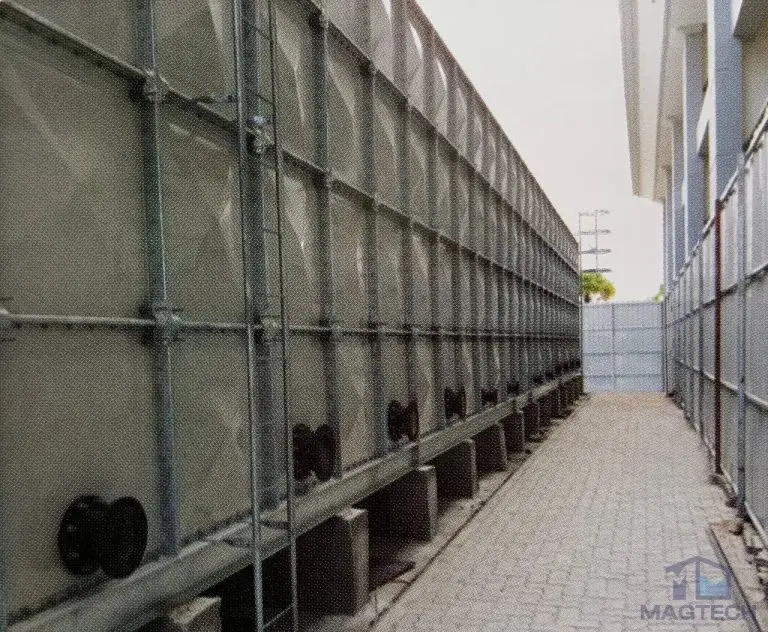
If you own or manage a building in Singapore, your water storage tank is one of those assets you rarely think about — until it starts to leak. Knowing how long your tank should last helps you budget for replacement before a failure disrupts your water supply, and it helps you choose the right material the next time you invest. Here’s a practical guide to the real-world lifespan of the tank types we work with most: stainless steel (SS304 and SS316), FRP/GRP fibreglass, and hot-dipped galvanised (HDG) pressed steel.
The short answer
With good-quality materials, proper installation, and correct maintenance, here’s what to expect:
| Tank type | Typical lifespan | Commonly used for |
|---|---|---|
| Stainless steel (SS304 / SS316) | 20–30 years | Potable water, hygienic storage |
| HDG pressed steel | 20–25 years | Fire protection, large-capacity storage |
| FRP / GRP fibreglass (incl. insulated) | 15–20 years | Domestic, rainwater, general storage |
Every figure above comes with the same three conditions: the tank is well made, it’s installed correctly, and it’s maintained on schedule. Those three factors matter more than the material itself — which is why two identical tanks can reach very different ages.
Stainless steel tanks: 20–30 years
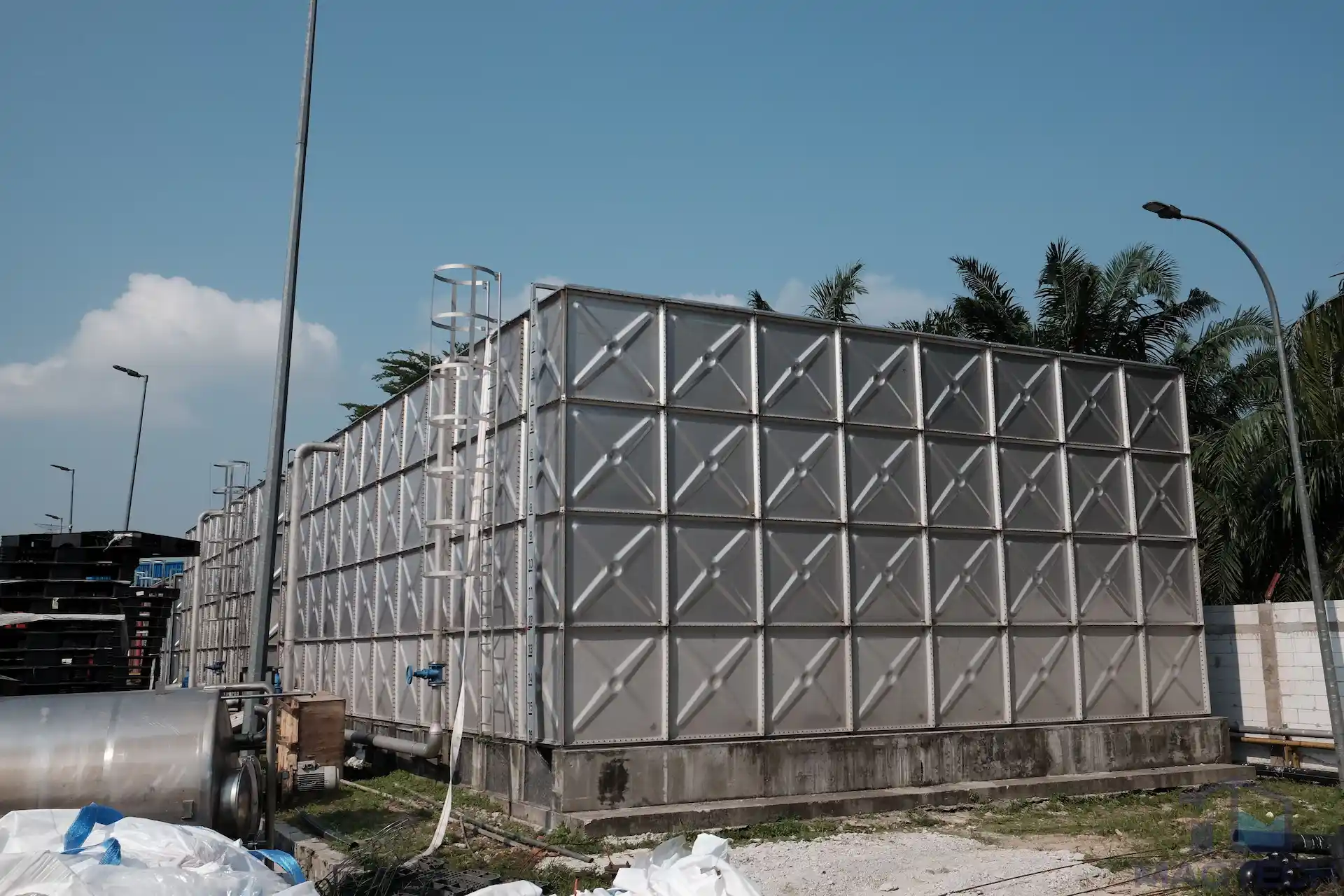
Stainless steel is the go-to choice for hygienic, long-life water storage, typically lasting 20 to 30 years when properly maintained. Its strength and clean internal surface make it well suited to potable water, and the grade you choose has a real bearing on both lifespan and compliance.
SS304 is a cost-effective grade suited to non-potable applications — fire suppression and flushing systems, for example — particularly in sheltered installations.
SS316 contains added molybdenum that greatly improves resistance to the chlorides and salt-laden air common in Singapore’s humid, coastal environment. Importantly, PUB’s Stipulation of Standards & Requirements specifies a minimum of Grade 316 for stainless steel sectional tanks storing drinking water, so SS316 is the compliant choice for potable storage — and it reliably reaches the upper end of the lifespan range on exposed and rooftop sites. (For a full breakdown, see our guide on SS304 vs SS316 water tanks.)
HDG pressed steel tanks: 20–25 years
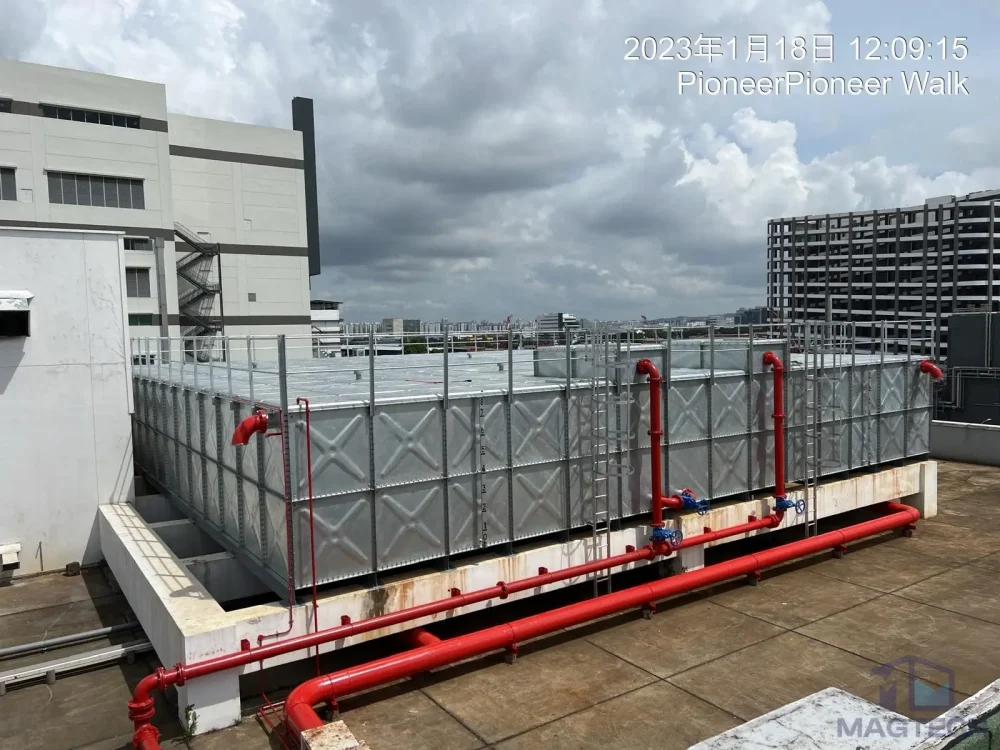
Hot-dipped galvanised pressed steel tanks are a dependable workhorse for large-capacity and fire-protection storage, generally lasting 20 to 25 years. Their longevity depends heavily on the integrity of the galvanised (zinc) coating that protects the steel underneath. Once that layer is compromised, corrosion can begin — so regular inspection and prompt attention to the coating are essential to reaching the top of that range.
FRP / GRP fibreglass tanks: 15–20 years

Fibreglass-reinforced plastic (FRP), also known as glass-reinforced plastic (GRP), is lightweight, corrosion-free, and cost-effective, making it a popular choice for domestic and rainwater storage. A well-built and properly installed FRP tank typically lasts 15 to 20 years. Because fibreglass doesn’t rust, its lifespan comes down to construction quality and installation: properly bonded panels, correct support, and protection from constant harsh UV are what keep it performing to the full range. Insulated FRP tanks share the same expected lifespan while adding temperature stability where it’s needed.
What actually determines how long your tank lasts
Material sets the ceiling, but these factors decide how close you get to it.
Installation quality comes first. A tank assembled by an experienced team, correctly sealed and properly supported, avoids the leaks and stress points that shorten life. A bargain installation is often the most expensive choice over time.
The environment matters enormously in Singapore. Constant humidity, high temperatures and salt-laden coastal air all accelerate corrosion — which is exactly why material and grade (SS316 over SS304, for instance) are worth getting right for exposed and rooftop sites.
Water quality and chemistry play a part too. Chlorine levels and any chemical dosing affect internal surfaces over the long term, and stagnant water encourages sediment and biofilm that stress the tank.
Maintenance and cleaning are decisive. In Singapore, PUB requires stored-water tanks to be cleaned at least once a year. That annual cycle isn’t only a compliance requirement — it’s also your best opportunity to catch early corrosion, seal degradation or worn fittings before they turn into failures. Tanks that are inspected and cleaned on schedule reliably outlast neglected ones.
Finally, correct usage extends life. Running a tank within its rated capacity and avoiding unnecessary pressure or temperature cycling reduces the strain that gradually breaks down any material.