The Step-by-Step Guide to Water Storage Tank Replacement
Understand the water tank replacement process step by step, from assessment and dismantling to installation and final testing.
Written by
Seah Kevin
Sales Manager, Magtech General
- Replacement & Lifespan
- Published September 23, 2024
- Updated September 9, 2026
Water storage tanks play a vital role in maintaining a consistent water supply, whether for residential, commercial, or industrial use. However, over time, tanks may experience wear and tear, leading to leaks, corrosion, or reduced efficiency. In some cases, a complete replacement is necessary to ensure the system operates at peak performance.
In this guide, we’ll walk you through the step-by-step process of water storage tank replacement, from the initial inspection to the final installation, so you can understand what to expect and how to prepare for the process.
1. Assessing the Current Tank
Before deciding whether to replace your water storage tank, it’s essential to first assess the condition of the existing tank. Our team will head down for a thorough inspection, looking for signs of wear such as leaks, corrosion, or structural damage.
- Leakage doesn’t always mean replacement: Not all leaks require a full tank replacement. Sometimes, small leaks can be fixed with patching work, which is a cost-effective alternative. Our experts will evaluate whether patching or repair is a feasible solution or if a replacement is the best course of action.
- Structural integrity: We also assess the structural integrity of the tank. If there is significant damage, rusting, or the material has weakened over time, replacement may be recommended.
2. Choosing the Right Tank Material for Your Needs
Once it’s determined that a replacement is necessary, the next step is selecting the right material for your new tank. Depending on your requirements, location, and usage, different materials may be more suitable:
- FRP/GRP Tanks: Lightweight, durable, and corrosion-resistant, these tanks are ideal for long-term use in various environments.
- Pressed Steel Tanks: Known for their strength and flexibility, these are great for industrial and fire-fighting applications.
- Stainless Steel Tanks: Offering superior corrosion resistance and hygiene, stainless steel tanks are perfect for residential and potable water use.
We also offer other specialized materials based on your specific needs. Contact us for more information on the best material for your requirements.
3. The Installation Process and Timeline
Once the material is selected, we provide a comprehensive quote that covers the full scope of the replacement or repair work. If the replacement is the chosen option, the process typically involves the following steps:
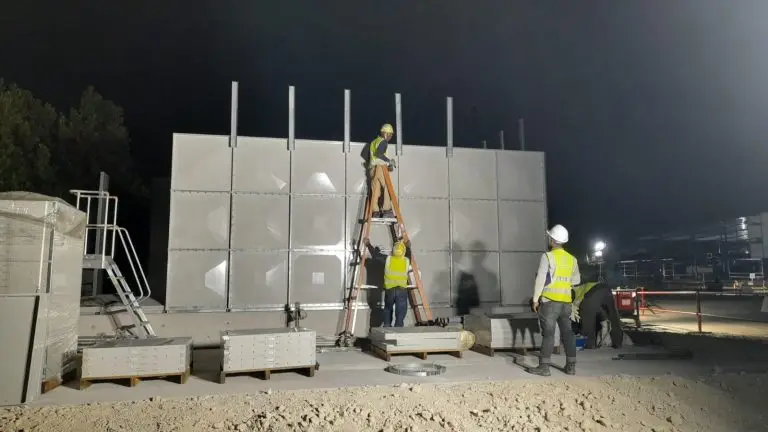
- Dismantling the old tank: If your existing tank needs to be replaced, our team will carefully dismantle it, ensuring that no damage occurs to the surrounding infrastructure.
- Disposal of the old tank: Proper disposal of the old tank is crucial. We handle the disposal process in compliance with environmental regulations and local guidelines, ensuring safe and responsible removal.
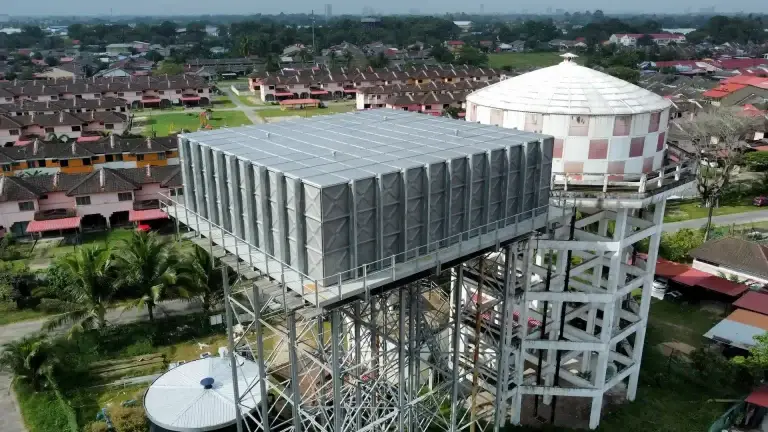
- Installation of the new tank: Once the old tank is removed, we proceed with the installation of the new tank. This includes setting up the base, fitting the tank in place, and connecting the necessary piping and valves.
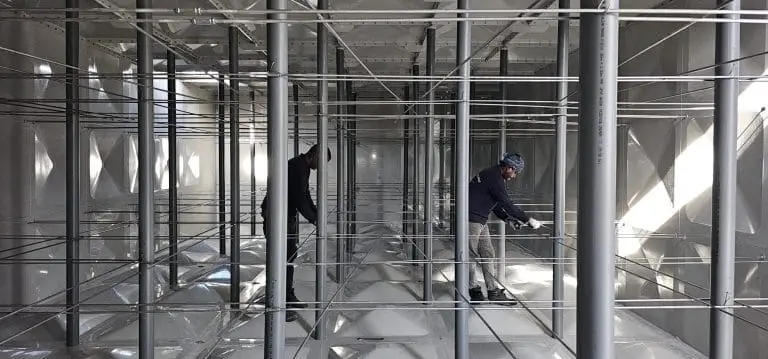
- Testing and commissioning: After installation, we perform thorough tests to ensure the tank is functioning correctly. Water pressure, quality, and tank integrity are checked to confirm that everything meets safety standards.
Timeline: The entire process, from dismantling to installation, can vary depending on the tank size, location, and complexity. However, we strive to minimize downtime and ensure the project is completed efficiently without compromising quality.
4. Safety Measures During Replacement
Safety is a top priority throughout the entire replacement process. Our team is well-trained in industry-standard safety protocols to ensure that the dismantling and installation are completed without risk to property or personnel.
- Workplace safety protocols: From using proper equipment to ensuring that the site is secure, our experts take every precaution necessary to prevent accidents or damage.
- Environmental precautions: During the disposal of old tanks, we ensure that no harmful materials are left behind, and all waste is disposed of according to regulations.
Need Assistance with Your Water Storage Tank Replacement?
If you’re noticing issues with your water storage tank, whether it’s leakage or reduced efficiency, give us a call. Our services are all covered under the necessary laws governing the region, and we can help you determine the best course of action. For more information on whether we can assist in your region, do contact us.
We handle everything—from the initial inspection, dismantling, and safe disposal of your old tank to the installation and commissioning of your new system. Whether it’s a minor patch repair or a complete tank replacement, you can rely on our experienced team to get the job done right.
Water tank assessment
Not sure how much life your tank has left?
Send us photographs of the tank and installation area, or arrange a site assessment.
Recent Posts
Need project advice?
Discuss Your Water Tank Requirements
Our team will respond within 24–48 hours.
Replacement & Lifespan Questions
What types of water tanks does Magtech General replace?
We specialise in replacing modular panel water tanks, including:
- FRP/GRP water tanks
- HDG (hot-dip galvanised) pressed steel tanks
- Stainless steel tanks (SS304 and SS316)
These are commonly used for domestic water storage, fire protection, make-up water systems, and non-potable applications.
We do not carry out replacement works for concrete tanks or round/cylindrical tanks.
Will my water supply be disrupted during tank replacement?
We offer several solutions to minimise water supply disruption during replacement works, including temporary tank systems, bypass systems, and compartment-by-compartment replacement.
Which approach is most suitable depends on your existing tank setup and site conditions — which is why a site inspection is an important first step before any replacement project. Our team will plan the works carefully to keep disruption to a minimum.
How long does a replacement project take?
Replacement timelines vary significantly depending on the size and type of the existing tank. Sectional panel tanks can differ greatly in configuration, which affects the schedule. Our team will provide a detailed timeline after completing the site assessment.