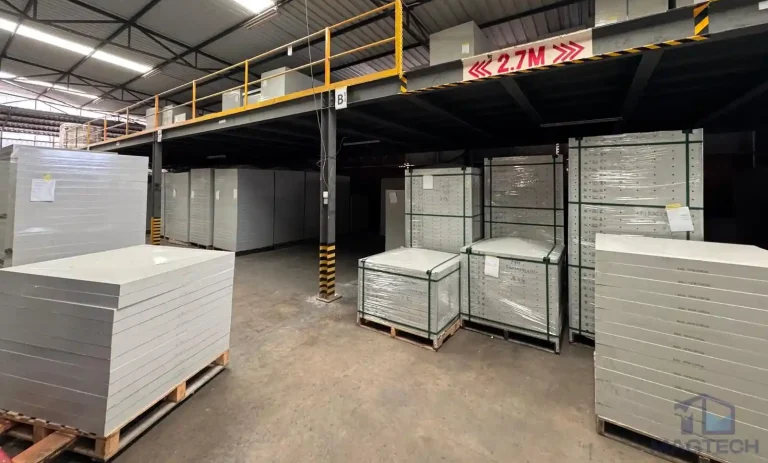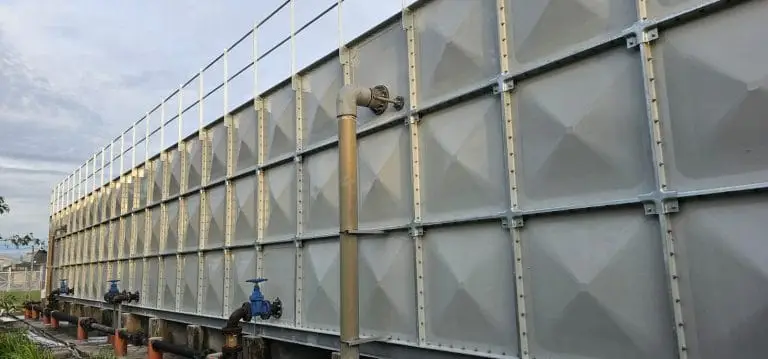
What about FRP tanks?
Stainless steel is not the only PUB-compliant option for drinking water. FRP / GRP (fibreglass) tanks also comply with PUB regulations for potable water and are in fact the more common choice across Singapore, largely because they are considerably more cost-effective.
In practice, SS316 tends to be chosen for smaller potable tanks, where clients are willing to accept the much higher cost in return for a longer service life and the hygienic, coating-free finish of stainless steel. For larger potable storage, FRP is often the more economical route. The right choice depends on tank size, budget, and how long you want the tank to last before replacement.
Grade selection by application
Use this as a quick reference when matching grade to use case in Singapore:
| Application | Recommended grade | Notes |
|---|---|---|
| Potable / drinking water | SS316 | PUB minimum Grade 316 for potable sectional tanks |
| Fire / sprinkler / hose reel | SS304 | Non-potable; SS304 acceptable and more economical |
| Flushing water | SS304 | Non-potable use case |
| Coastal or marine-exposed sites | SS316 | Higher chloride exposure demands molybdenum |
| Food, pharmaceutical, hospital | SS316 | Hygiene-critical; maximum corrosion resistance |
| Large potable storage (cost-sensitive) | FRP / GRP | PUB-compliant and more economical at larger sizes |
| Hose reel / sprinkler tanks | HDG | A cost-effective and commonly specified option for fire-protection water storage. In Singapore, HDG pressed steel sectional tanks are commonly manufactured in accordance with SS 22:1979, subject to the project specifications and applicable SCDF Fire Code requirements. |
If you are unsure which category your tank falls under, the safest position for any drinking-water application is SS316.
Why this matters: PUB compliance and certification
Choosing the correct grade is only part of staying compliant. Under the Public Utilities (Water Supply) Regulations and SS 636 (Code of Practice for Water Services), building owners and MCSTs carry ongoing legal responsibilities for potable water storage:
- Tanks must be inspected, cleaned, disinfected, and certified at least once every 12 months by a Licensed Plumber (LP).
- Water samples must pass chemical and bacteriological testing at a Singapore Accreditation Council (SAC-SINGLAS) accredited laboratory.
- PUB conducts random inspections, and failure to certify on time is an offence under the regulations.
Specifying the right grade from the outset reduces the risk of premature corrosion — which is the most common reason a tank fails inspection or needs emergency replacement.
PUB accepts test reports only if they bear the SAC-SINGLAS logo or the ILAC-MRA partner logo. A report from an unaccredited laboratory is rejected outright, however genuine the test. That is a clean differentiator against low-cost imports.
For ongoing maintenance after installation, building owners should also follow PUB requirements for water tanks in Singapore, including cleaning and certification requirements for potable water storage.
Lifecycle cost: why stainless steel pays off
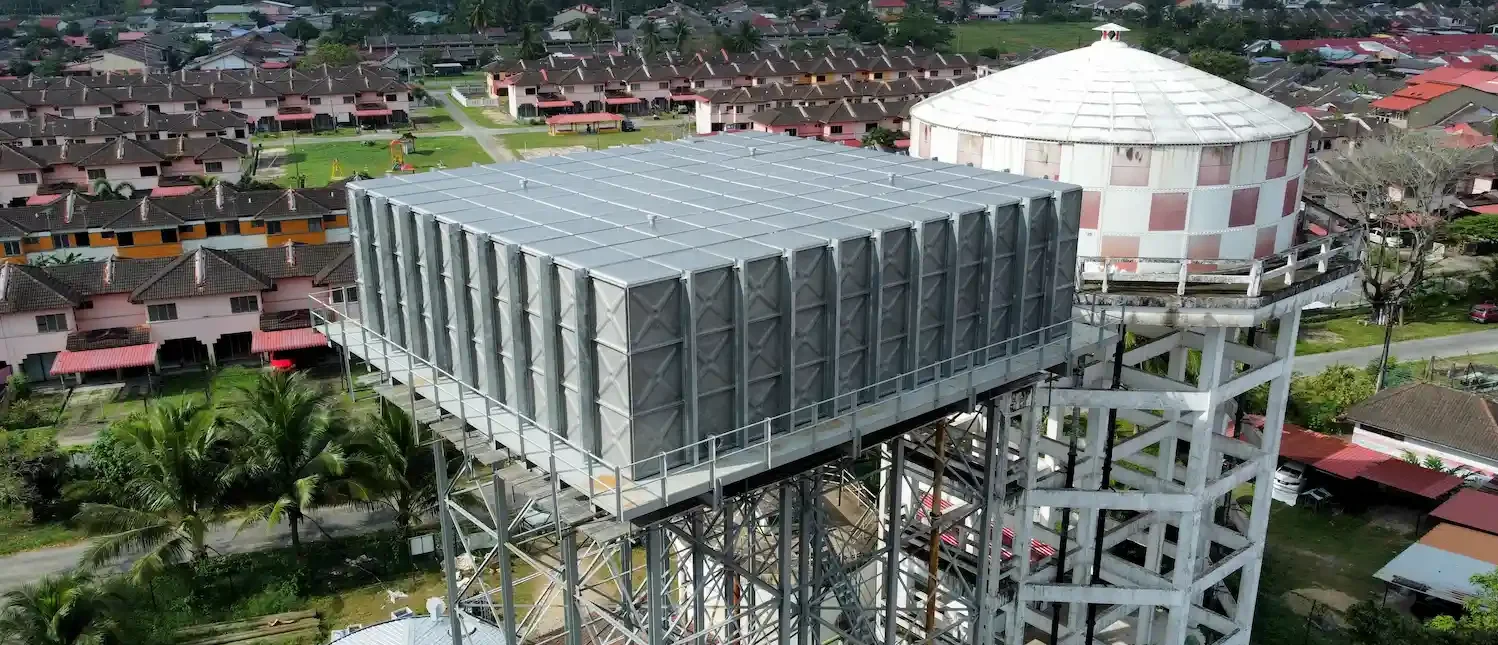
SS316 carries a higher upfront cost than SS304, FRP, or hot-dip galvanised (HDG) tanks. But the more useful figure is total cost of ownership over the tank’s service life. With good maintenance, typical service lives are:
- Stainless steel: roughly 20–30 years
- FRP / GRP: roughly 15–20 years
- HDG (galvanised): roughly 20-25 years
Stainless steel needs no internal or external protective coating, so there is nothing to peel, scratch, or degrade over time. Maintenance is largely limited to routine cleaning. For a potable tank that must be kept in compliance for the long term, the longer lifespan and lower maintenance burden can outweigh the higher purchase price — though for larger tanks, the lower upfront cost of FRP often makes it the more practical choice.
Get the right grade specified from the start
Magtech General Construction & Trading has been supplying, installing, and repairing water tanks in Singapore since 1995, and is the sole Singapore distributor of SUNNIK stainless steel tanks — a manufacturer with over 40 years of experience.
Whether you need a compliant SS316 potable tank, an FRP tank for larger potable storage, or an SS304 sprinkler tank, we can advise on the most suitable option for your application, budget, and PUB requirements.
Contact Magtech for a site inspection and quotation.
This article is for general guidance. Tank grade selection should always be confirmed against the latest PUB Stipulation of Standards & Requirements and SS 636, and verified for your specific project conditions.