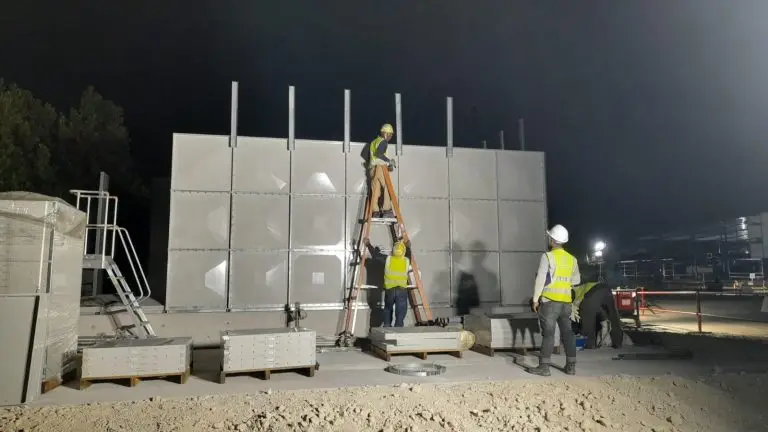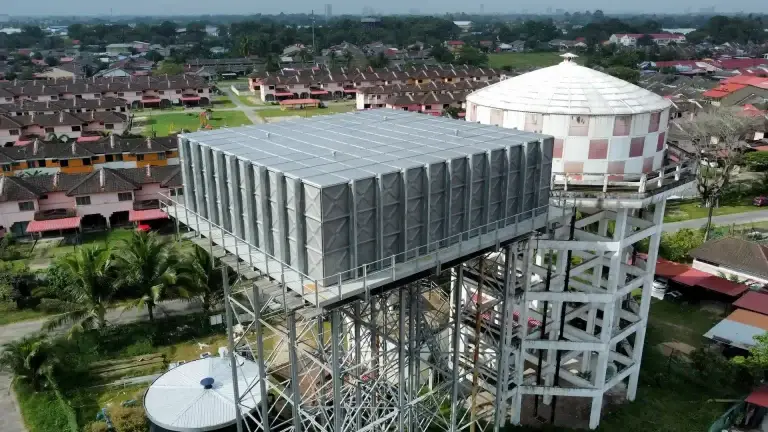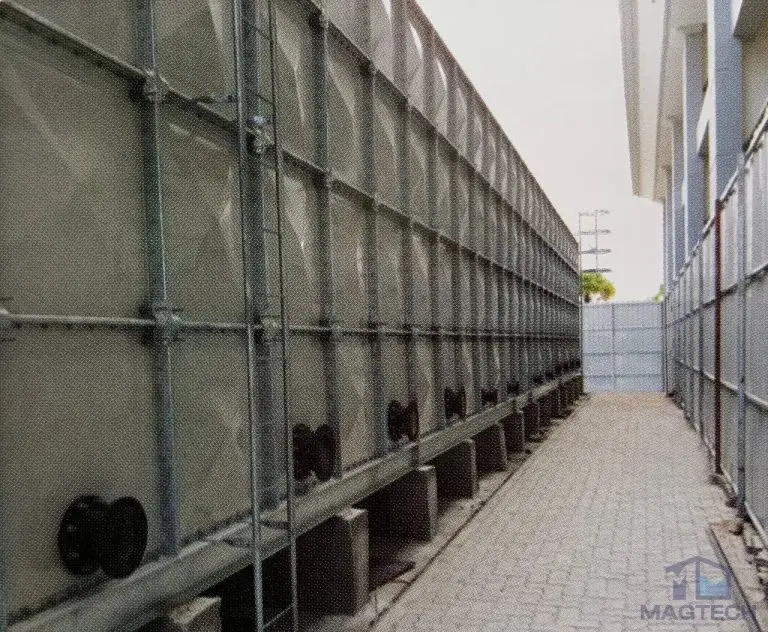
Many building owners and facility managers are concerned that replacing an existing sectional panel water tank will result in a complete water shutdown throughout the replacement process.
However, for certain existing tank configurations, it is possible to replace the tank with minimal water disruption through a staged compartment-by-compartment replacement methodology.
At Magtech General Construction & Trading Pte Ltd, our technical team has handled various water tank replacement projects across Singapore involving FRP/GRP water tanks, HDG pressed steel tanks, and stainless steel sectional panel tanks for residential, commercial, industrial, and fire protection applications.
This article explains some of the common replacement methodologies used for sectional panel water tanks.
Understanding Existing Compartment Tanks
Many existing sectional panel water tanks in Singapore are designed with two compartments separated by an internal partition wall.
This allows one compartment to remain operational while the other compartment can be isolated for maintenance or replacement works.
In some situations, this design can also help reduce water disruption during tank replacement works.
Compartment-by-Compartment Water Tank Replacement Methodology
Step 1 – Isolate and Drain One Compartment
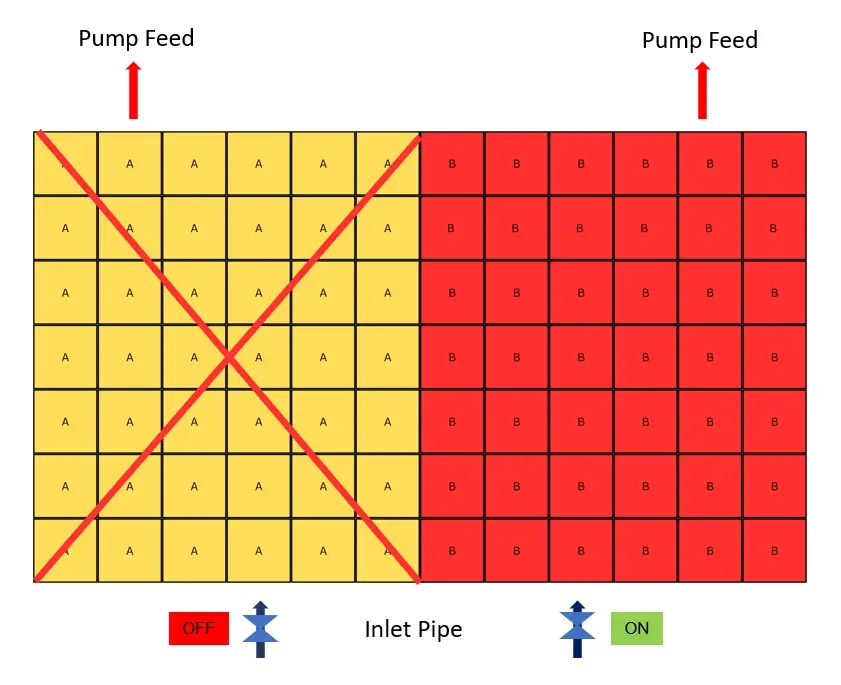
The first step is usually to isolate and drain one compartment of the existing tank.
Typically, the longer or larger compartment is selected first depending on:
- site conditions
- piping arrangement
- staging requirements
- temporary water storage considerations
During this stage:
- inlet valves to the isolated compartment are shut off
- water is drained
- the selected compartment is dismantled
- the remaining compartment continues operating and supplying water to the building
This helps minimize water disruption during the replacement process.
Step 2 – Install the First New Compartment
After dismantling the first compartment, the new tank section will be installed.
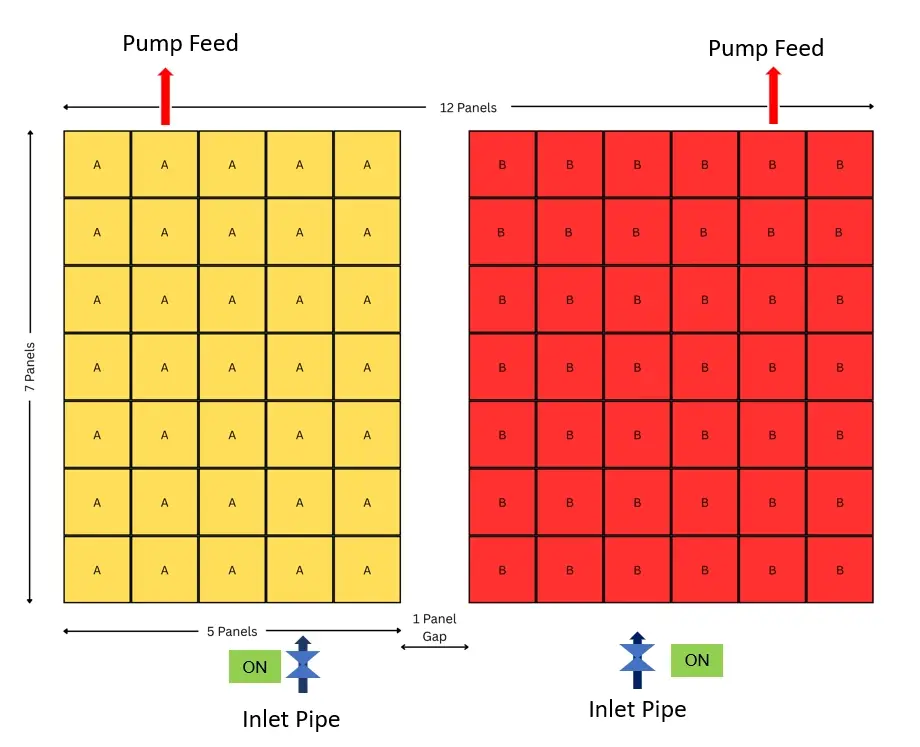
However, in many cases, the new compartment cannot be installed directly against the existing old compartment immediately.
A temporary gap or offset is usually required between the old and new structures to provide sufficient working space for:
- partition wall installation
- bolt tightening
- gasket installation
- tie-rod installation
- alignment works
- safe worker access
This is why the temporary tank configuration may differ slightly during the replacement process.
For example:
- one compartment may temporarily decrease by 1 panel
- the other compartment may increase by 1 panel
- or a temporary spacing gap may be introduced
This is a normal and intentional installation methodology, not a design issue.
One advantage of sectional panel tanks is that individual panels can be brought into restricted plant rooms or rooftop areas before assembly.
Step 3 – Transfer Water Supply and Dismantle Remaining Old Compartment
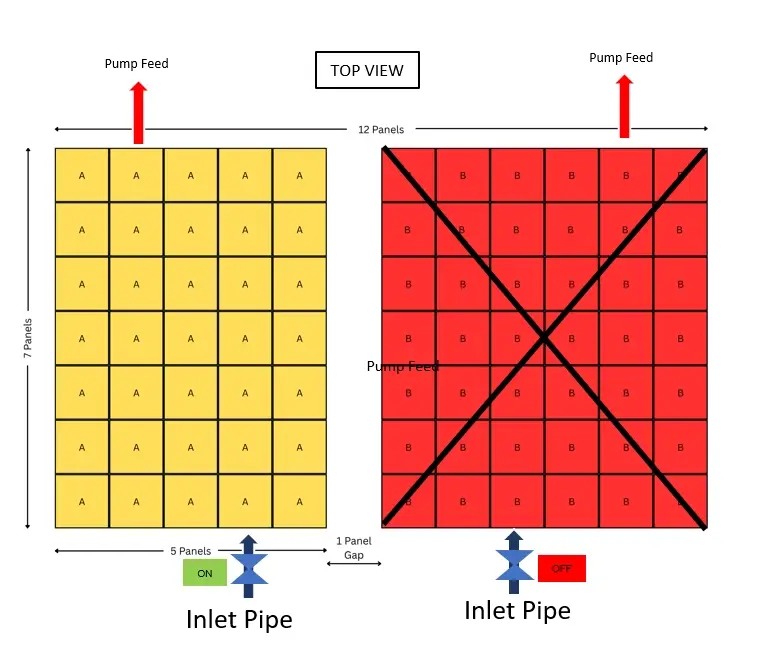
Once the first new compartment is completed and tested:
- water supply can be transferred over to the new compartment
- the remaining old compartment can then be isolated and dismantled
At this stage:
- one side of the tank is already fully new and operational
- the second old compartment is removed completely
Step 4 – Complete Final Tank Installation
The final compartment is then installed and connected together with the completed new partition wall.
Once completed:
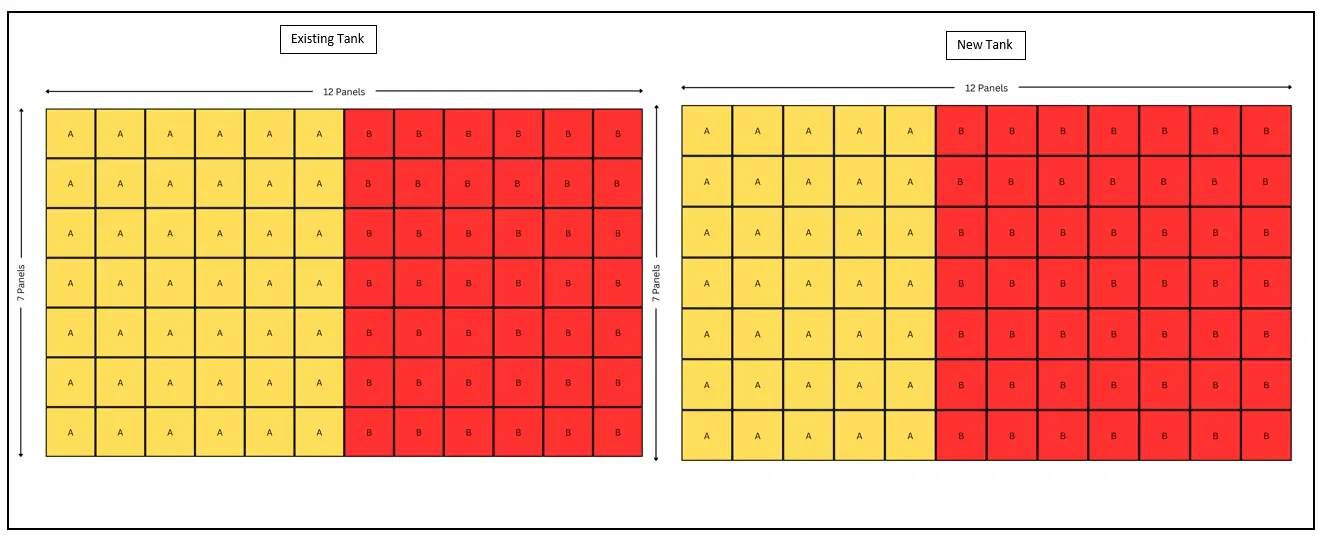
- the entire tank becomes a fully new sectional panel water tank system
- inlet and outlet systems are reinstated
- testing and commissioning are carried out
- the tank returns to full operation
Depending on project requirements, the final tank configuration may differ slightly from the original layout due to:
- installation access requirements
- structural limitations
- updated design requirements
- revised partition arrangements
- improved maintenance access
Can All Tanks Be Replaced With Minimal Water Disruption?
NO.
This methodology depends heavily on:
- existing tank compartment configuration
- available working space
- piping arrangement
- site access
- tank condition
- structural constraints
- building water demand
Some tanks are simply not suitable for staged compartment replacement.
For example:
- single compartment tanks
- tanks installed within tight confined spaces
- tanks with insufficient access clearance
- tanks without proper isolation systems
may require a full shutdown replacement instead.
What If the Client Wants an Exact 1-to-1 Tank Replacement?
Some building owners may prefer the new tank to remain exactly identical to the existing configuration without temporary partition shifting or dimensional adjustments.
In such situations, two common alternative solutions are usually considered.
Option 1 – Direct Water Supply Bypass System
A temporary bypass system can sometimes be installed to feed incoming water directly into the building water supply line while the existing tank is completely removed and replaced.
Some buildings already have built-in bypass systems.
If not, temporary piping modifications may be required.
This method depends on:
- available PUB mains pressure
- building water demand
- booster system arrangement
- existing piping design
However, bypass systems may not always be suitable for:
- high-rise buildings
- buildings with high water consumption
- systems requiring constant stored water reserve
Option 2 – Temporary Water Tank System
Another common solution is the installation of temporary water tanks.
This method allows:
- the entire existing tank to be dismantled at once
- full 1-to-1 replacement
- continuous temporary water storage during replacement works
Temporary tank systems are commonly used for:
- condominiums
- commercial buildings
- industrial facilities
- hospitals
- critical infrastructure projects
The temporary system usually includes:
- temporary storage tanks
- temporary piping
- temporary pumps
- isolation valves
- testing and commissioning works
Although this method provides greater flexibility, it generally involves:
- additional space requirements
- higher costs
- additional installation works
Choosing the Correct Replacement Methodology
Every water tank replacement project is different.
The most suitable replacement methodology depends on:
- building operations
- water usage requirements
- tank configuration
- available working space
- shutdown limitations
- budget considerations
- project timeline
An experienced water tank specialist should properly assess the site before recommending the most suitable approach.
Water Tank Replacement Specialist in Singapore
Magtech General Construction & Trading Pte Ltd specializes in:
- FRP/GRP water tank replacement
- HDG pressed steel tank replacement
- SS304/SS316 stainless steel tank installation
- compartment-by-compartment tank replacement
- temporary tank systems
- sectional panel tank repair and maintenance
Our technical team has experience handling sectional panel water tank projects across Singapore and Asia for residential, commercial, industrial, and fire protection applications.
RELATED ARTICLES: