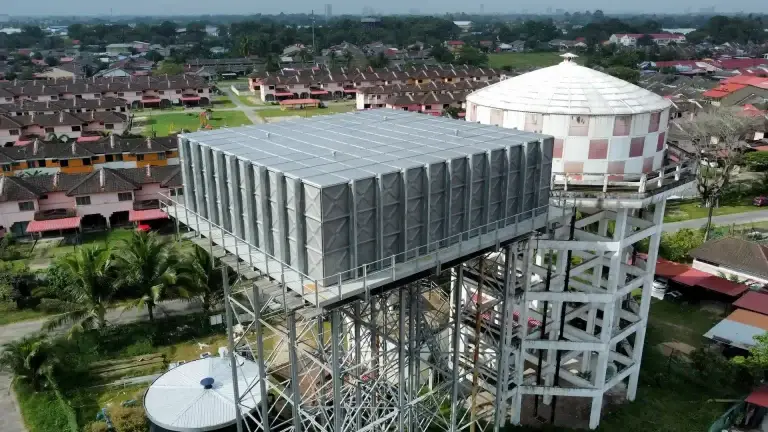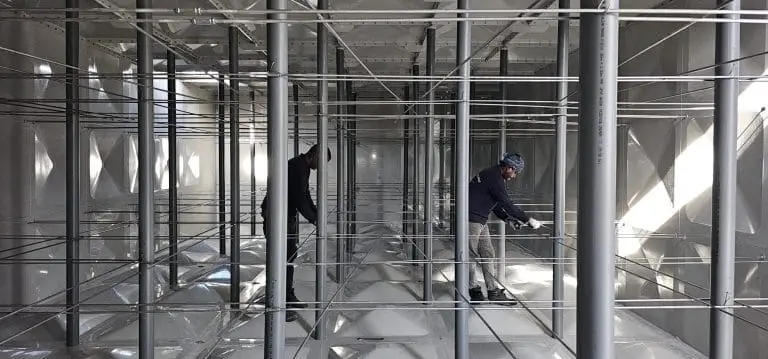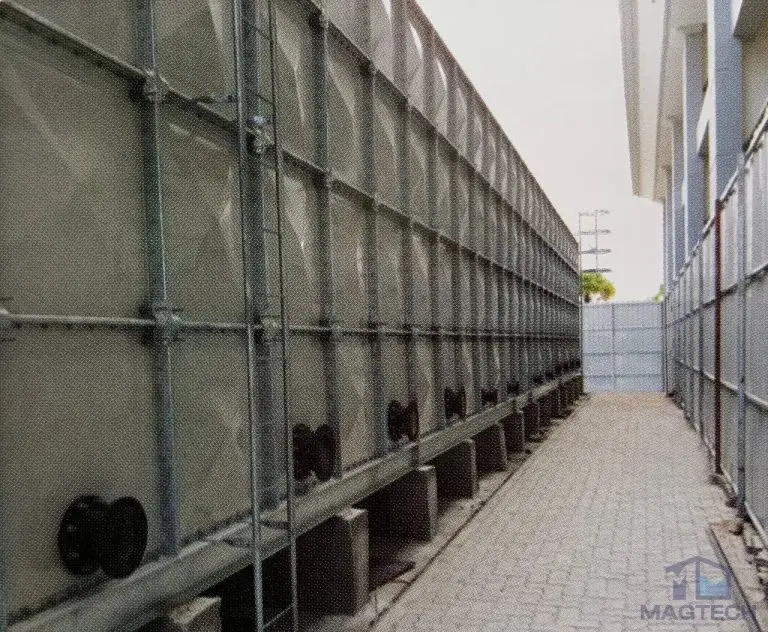
Short answer: The cost of replacing a commercial water tank in Singapore is made up of three parts — supply, labour, and additional works. Supply is driven mainly by tank material (FRP, hot-dip galvanised, SS304 or SS316), capacity and height. Labour is driven by site access and installation difficulty. Additional works cover piping, electrodes, guardrails and regulatory submissions. No two sites price identically, which is why a site assessment is required before any figure is meaningful.
Building owners, MCSTs, facility managers and main contractors ask us the same question at the start of every replacement enquiry: what is this going to cost? The honest answer is that a tank is not a catalogue item. Two buildings with identically sized tanks can differ by a wide margin once access, material grade and regulatory scope are accounted for.
This article breaks down where the money actually goes, so you can read a quotation properly and compare like with like.
What are the three cost components of a water tank replacement?
Every commercial water tank replacement quotation in Singapore breaks down into three blocks:
- Supply cost — the tank itself: panels, bolts, gaskets, structural bracing, base frame, fittings and accessories.
- Labour cost — dismantling the existing tank, shifting material, installation, and site supervision.
- Additional works — piping connections, electrodes and electrical work, guardrails, submissions, and anything site-specific.
Understanding which block a line item belongs to is the fastest way to spot why one quotation is cheaper than another. A low headline price very often means additional works have been excluded rather than that the tank is cheaper.
How does tank material affect the price?
Material is the single largest driver of supply cost. From lowest to highest:
FRP (fibreglass) → hot-dip galvanised steel → SS304 stainless → SS316 stainless
But material is not a free choice — in Singapore, the application dictates the material.
| Material | Typical application | Governing standard | Typical service life |
|---|---|---|---|
| FRP / GRP | Potable water, domestic storage, rooftop and transfer tanks | SS 245 (SLS certified), WRAS | 15–20 years |
| Hot-dip galvanised (pressed steel) | Fire protection — sprinkler, hosereel, fire water | SS 22, LPCB listed, BS 1564 | 20–25 years |
| SS304 stainless | Non-potable, cooling tower, make-up water | BS 1564 | 20–30 years |
| SS316 stainless | Potable water, high-specification, coastal or chloride-exposed sites | SS 636 (PUB) | 20–30 years |
Two rules matter most in Singapore:
For potable water, PUB’s requirements under SS 636 mean stainless steel must be minimum Grade 316. SS304 does not qualify for potable storage. Among sectional panel tanks, that leaves FRP (certified to SS 245) and SS316 as the compliant options for domestic and potable use. Choosing SS304 to save money on a potable tank is not a saving — it is a rejected submission.
For fire protection, hot-dip galvanised is the default. Fire tank specifications are written around SS 22, the Singapore Standard for pressed steel sectional tanks, with LPCB listing where required. Potable-grade material carries no benefit in a fire tank, so specifying stainless there usually means paying for compliance you do not need.
The practical implication: if a quotation offers you a cheaper material than the one your application requires, the saving is not real.
Why do tank prices change from year to year?
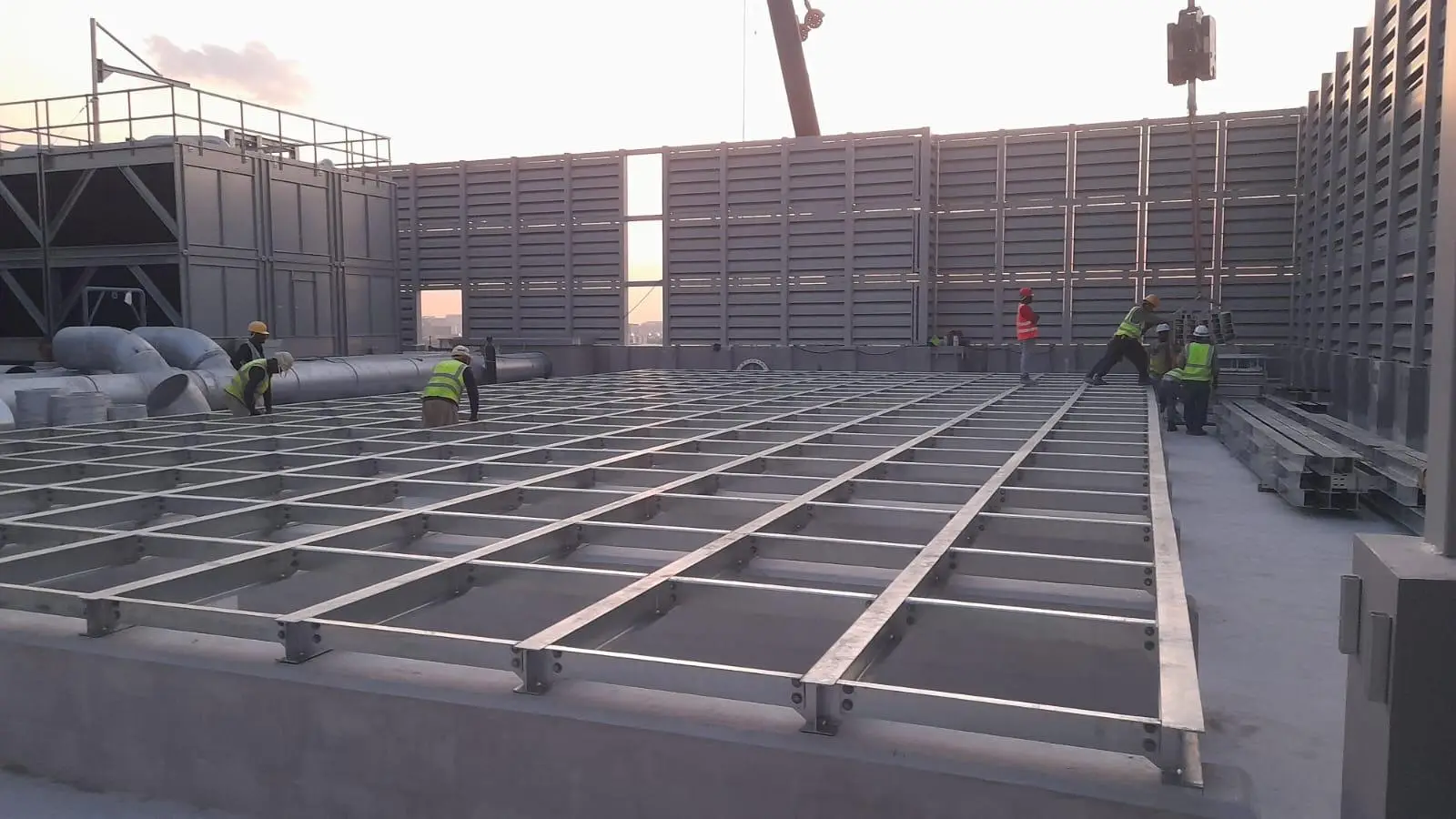
Sectional panel tanks are made from globally traded raw materials — steel coil, zinc for galvanising, nickel and chromium for stainless, and resin and glass fibre for FRP. Those inputs move with global supply chains, energy prices and geopolitical disruption, and the effects reach Singapore with a lag of several months.
Prices have moved upward across all four materials in recent years, driven largely by raw material and energy costs rather than by fabrication. This is why quotations carry a validity period, and why a figure from a year-old proposal should never be relied on for current budgeting.
If you are budgeting for a replacement in the next financial year, ask for a fresh quotation rather than escalating an old one.
Does brand actually change the price?
Yes — significantly, and this is where most price gaps between quotations come from.
Sectional panel tanks look similar in a photograph and behave very differently in year twelve. Panel thickness, resin quality, gasket and sealant specification, bolt grade, and bracing design all vary between manufacturers, and none of them are visible from the outside.
Magtech is the sole Singapore distributor of SUNNIK, a manufacturer with over 40 years of experience producing sectional panel tanks for clients worldwide. SUNNIK sits at the higher end of the market. To give one concrete example of where the difference lies: some imported panels are supplied at 3–4mm, where the equivalent SUNNIK panel is 5mm with a 1.5mm cover.
We are direct about the trade-off. A SUNNIK tank costs more up front. Over a 15–20 year service life, the cost of a leak, an emergency shutdown in a live building, or an early replacement comfortably exceeds the initial difference. That is the judgment we make on behalf of our clients, and we will tell you when a cheaper specification is genuinely adequate.
Because we import directly rather than through an intermediary, clients in Singapore — where there is no local factory — receive factory-direct pricing rather than a reseller’s margin.
What makes labour cost go up or down?
Labour is where identical tanks produce very different quotations, because labour prices the site, not the tank.
The main drivers:
- Access. A tank in an open plant room is straightforward. A tank reached through a riser, a stairwell, or a rooftop requiring crane or hoist access is not. Where a tower crane or lorry crane is required, that cost is real and appears in the quotation.
- Height. Tank height drives labour sharply. Taller tanks mean heavier base-tier panels, more difficult handling, scaffolding, and Working at Height requirements.
- Shape and size. Odd-shaped tanks, multi-compartment layouts and very large capacities require experienced crews and longer programmes.
- Panel count — and this is the point most people miss. In a replacement, the crew handles the panels twice: dismantling the old tank and installing the new one, plus shifting and disposal. A replacement is not a new installation with a small extra. Handling roughly double the panel count is why replacement labour sits well above supply-and-install of the same tank on a bare plinth.
- Live-site constraints. Occupied buildings, hospitals, hotels and secure sites bring night works, permits, safety inductions and staged sequencing.
- Minimum crew mobilisation. A small tank still requires a full crew, transport and site setup. Labour does not scale down proportionally, which is why very small jobs carry a floor price.
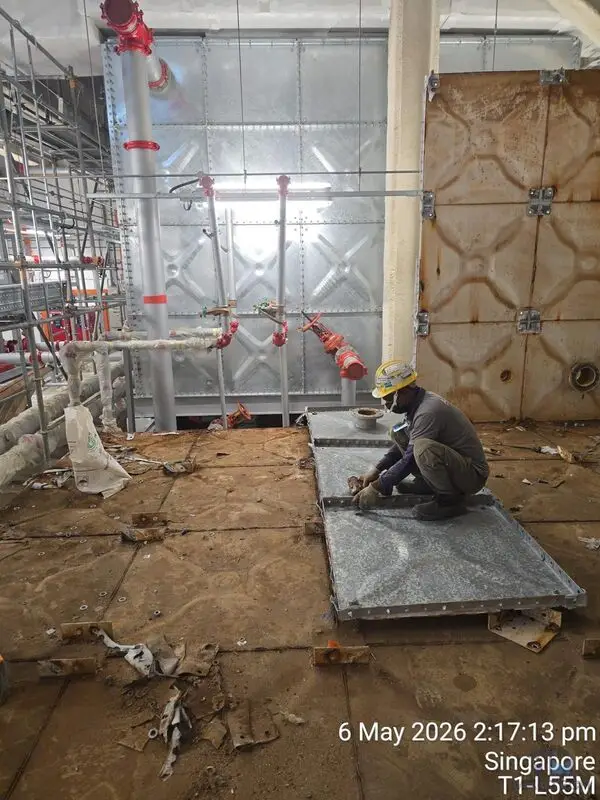
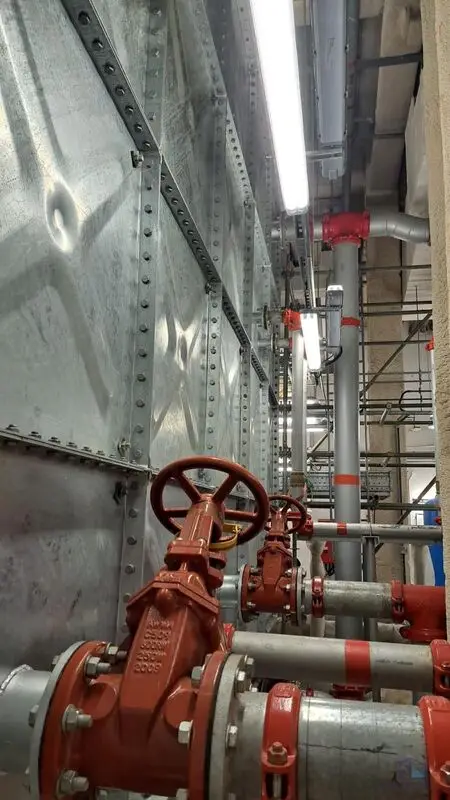
Magtech maintains its own installation teams in Singapore and Cambodia rather than subcontracting the core work. Several of our installers have been with the company for well over a decade, some approaching two. That matters commercially in two ways: we are not paying a subcontractor’s margin, and an experienced crew does not turn a two-day dismantle into a five-day one when the site surprises them.
What counts as “additional works”?
Additional works are legitimate scope — not padding — and they are the most common source of confusion when comparing quotations.
Piping works. Every tank has inlet, outlet, overflow and drain connections. The number, size and material of nozzles and flanges varies widely between sites. A tank with a large number of connections, or connections in non-standard positions, costs more. Repositioning existing pipework to suit new tank dimensions is a separate scope again.
Electrodes and electrical works. Level control — electrode sets, water level indicators, ball float valves, motorised valves — is quoted per site. A tank feeding a pump set with automatic level control is a different scope from a simple gravity tank.
Guardrails, ladders and safety access. Working at Height requirements mean tanks above roughly 2.5m generally need guardrails, and a concrete plinth pushes overall height higher still. PUB increasingly requires guardrails or fencing on domestic and roof tanks, and this can even change the tank dimensions. Note also that internal ladders on FRP potable tanks must be FRP — aluminium internal ladders are not PUB-approved.
PUB submission. Replacement work generally requires a PUB submission, which has carried a charge of approximately S$1,100 since 1 April 2025. PUB may also require justification of water demand, which means gathering several months of past SP utility bills. Works cannot begin before the PUB acceptance letter is issued.
PE / LP endorsement. Professional Engineer endorsement and Licensed Plumber supervision are separate paid line items where required, and are frequently excluded from headline prices. Ask explicitly whether they are in or out.
Disposal. Removed tank material must be disposed of in accordance with NEA requirements. Steel typically has scrap value; FRP does not.
Temporary supply. Where the tank is single-compartment, or the site cannot be shut down, temporary tanks or a bypass arrangement may be needed.
How long does a commercial tank replacement take?
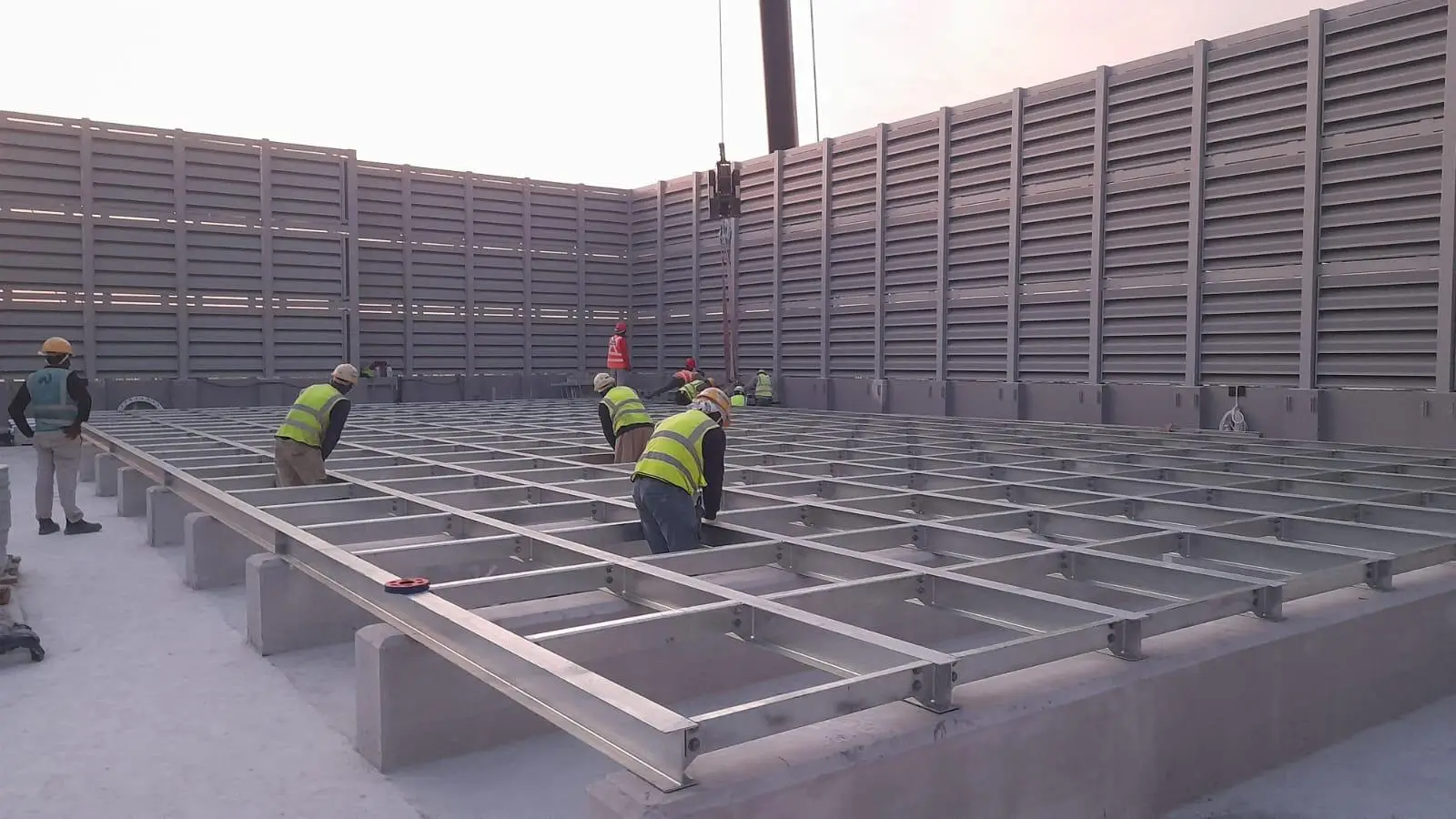
Programme affects cost, so it is worth understanding.
For a dual-compartment tank in a live building, replacement is normally carried out compartment by compartment so water supply is never fully interrupted. A typical sequence per compartment runs: shift material, dismantle, install, complete piping and electrodes, wash the tank, then wait for water sample results — which take several days to about a week — before the compartment returns to service. The second compartment then repeats the cycle.
Fabrication and delivery of a new tank typically runs 8–10 weeks from confirmed drawings, so the programme starts well before anyone is on site.
Single-compartment tanks and confined sites cannot be staged this way and require a full shutdown or temporary storage — which is itself a cost line.
How do I compare two quotations fairly?
Before comparing totals, check that both quotations state:
- The material and grade, and that it suits the application (potable vs fire vs non-potable)
- Effective capacity, not just nominal dimensions
- Whether dismantling, shifting and disposal of the old tank are included
- The number and size of nozzles, and whether piping connection is included
- Whether electrodes, level indicators and valves are included
- Whether guardrails and ladders are included, and in what material
- Whether PUB submission, PE endorsement and LP supervision are in or excluded
- Warranty terms — ours are 2 years on manufacturing defects plus a 1-year Defects Liability Period on workmanship
- Validity period of the price
If a quotation is materially cheaper, the difference is almost always in this list — not in the tank.
Get an accurate figure for your tank
We don’t quote blind. Send us photos of your existing tank and its access, or arrange a free site assessment, and we’ll return a fully itemised quotation showing exactly what is in scope and what is not.
📞 +65 8700 1377 · ✉️ admin@magtechgeneral.com.sg
Magtech General Construction & Trading Pte Ltd — sole Singapore distributor of SUNNIK sectional panel tanks. Established 1995, 35+ years of experience, 4,000+ projects.