Brown or Discoloured Tap Water in Singapore: How Often It Happens, the Causes, and What to Do
Written by
Seah Kevin
Sales Manager, Magtech General
- Water Quality & Filtration
- Published November 24, 2026
- Updated November 25, 2026
How often does it happen?
Not often. PUB’s wording is that drinking water “is normally clear but very occasionally may appear discoloured or contain particles.”
There is no published count of discoloured-water cases. The nearest official figure comes from a reply to Parliament in November 2024: in 2023 PUB received about four cases of feedback a day on tap water quality of every kind, across the whole country, and responds to each one with laboratory testing.
PUB’s published results for 2025 show how clear the supplied water is. Colour measured below 5 Hazen units against a limit of 15. Turbidity averaged 0.15 NTU against a limit of 5. Iron averaged 0.009 mg/L.
What PUB says to do
- Run the taps, and flush any water tank inside your premises, until the water runs clear.
- Do not use the water for laundry or other purposes while you do this.
- If it has not cleared after 10 to 15 minutes, call PUB’s hotline at 1800-CALL-PUB.
PUB also asks you to notice where the discoloured water is coming from. If it is only one appliance, or only the hot taps and showers, PUB says this could indicate a faulty hot water heater or appliance.
What causes it
PUB explains that the common cause of temporary discolouration is mineral sediment inside the pipe being stirred up. Tap water carries minute amounts of naturally occurring minerals. Over time they settle at the bottom of pipes, especially where the water moves slowly, and a sudden change in flow lifts them again.
PUB names these as the common triggers:
- routine cleaning of water tanks
- flushing of service pipes in buildings
- testing of fire hydrants
And it lists other reasons discoloured water can occur:
- corrosion of the iron tank and other components in a storage-type hot water heater, at the end of its service life or because of a quality issue
- corroded service water pipes and fittings
- stagnant water in pipes and installations after infrequent use, for example when owners return from a holiday
- heavy draw-off from a water mains leak, which stirs up sediment
So the cause can be on either side: brief, planned work or a leak on the network, or something within the building. Where the source is PUB’s mains, PUB flushes the mains until the water clears. Where the source is inside the premises, PUB’s example being a faulty or corroded water tank, PUB advises the owner to repair or replace the appliance or pipes.
Three reported cases
Reported cases are few, short-lived and resolved by flushing. Three from 2026 show the range.
A leak on the network. On 1 January 2026, residents of a condominium in Sin Ming reported discoloured water. PUB said it was likely due to mineral sediment in the pipe network being stirred up by a pipe leak, and repairs were completed within days.
A single floor of one block. In June 2026 a resident in the Bedok Reservoir Road area had brown water three times over a few days. PUB and the Town Council flushed her unit and two others on the same level. PUB’s checks on samples from its water mains confirmed no abnormality, and the water cleared after the Town Council flushed the internal water service pipes. The cause was still being investigated when it was reported.
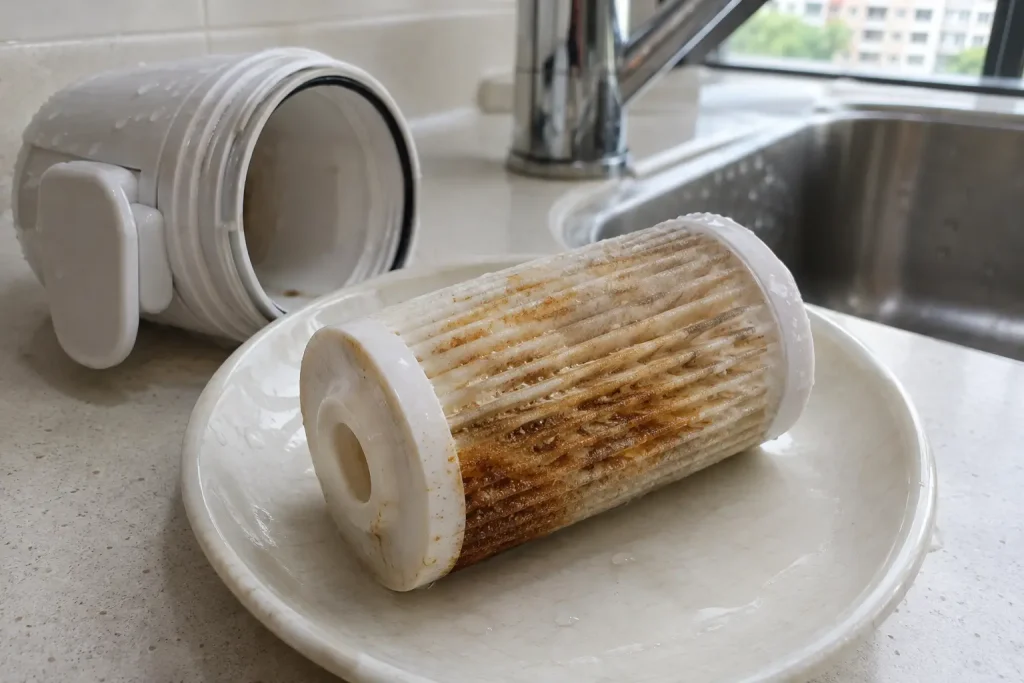
A filter that turned brown. In March 2026 a resident posted that a new tap filter had turned brown within about a week, and that her taps ran brown for a few seconds, longer after a holiday. No cause was established. PUB’s general explanation covers the filter: the brownish deposits on filters are the minute amounts of minerals in the water, absorbed and oxidised over time.
Is discoloured water safe to drink?
PUB’s advice is direct: if you see discolouration, let the tap run until it is clear before drinking the water. If it does not clear, call PUB.
On iron specifically, the World Health Organization sets no health-based guideline value, because iron is “not of health concern at levels found in drinking-water”, though it may affect how acceptable the water looks and tastes.
Milky or cloudy water is different. PUB says that in rare instances dissolved air appears as tiny bubbles and makes the water look milky. The bubbles disappear after a few minutes and the water is still safe for consumption.
If it keeps happening: who looks after which part
A one-off episode that clears after flushing needs nothing more. If it comes back, the question is which part of the system to check, and who is responsible for it.
- HDB estates. The Ministry’s reply to Parliament describes a shared responsibility. PUB looks after its network. Town Councils maintain the water storage tanks and the water pipes on common property, and the tanks are inspected, cleaned and disinfected every year by a licensed plumber. Homeowners maintain the pipes and fittings inside their own units.
- Condominiums. The MCST arranges the annual tank cleaning and holds the certificate. Ask the managing agent for the date of the last one.
- Landed houses. PUB maintains the supply up to the meter. Everything after the meter is the owner’s, including the tank if the house has one. Our article on landed house water tanks covers what that involves.
Then match the pattern to the cause:
- Only the hot tap. Check the storage water heater. PUB lists a corroded heater tank as a cause, and advises replacing appliances that show corrosion or have passed their service life.
- Only after you have been away. Stagnant water. Flush, as PUB advises, and it is done.
- Every tap, and the building has a tank. Ask when the tank was last cleaned, and whether the episode followed a cleaning. If a tank is corroded, cleaning will not fix it; it needs repair or replacement.
- It keeps returning at the same taps. Have the pipework inside the home checked by a PUB Licensed Plumber. PUB’s advice on prevention is to use corrosion-resistant materials for service pipes.
Two points on pipe work. Since 1 April 2018 it has been an offence to engage a plumber who is not licensed by PUB for regulated water service work, which includes replacing water pipes; simple jobs such as changing a tap are exempt. And replacing pipes can be costly, because concealed pipes mean hacking into walls and floors and making good afterwards. It is far less disruptive when done as part of a renovation.
Where Magtech comes in
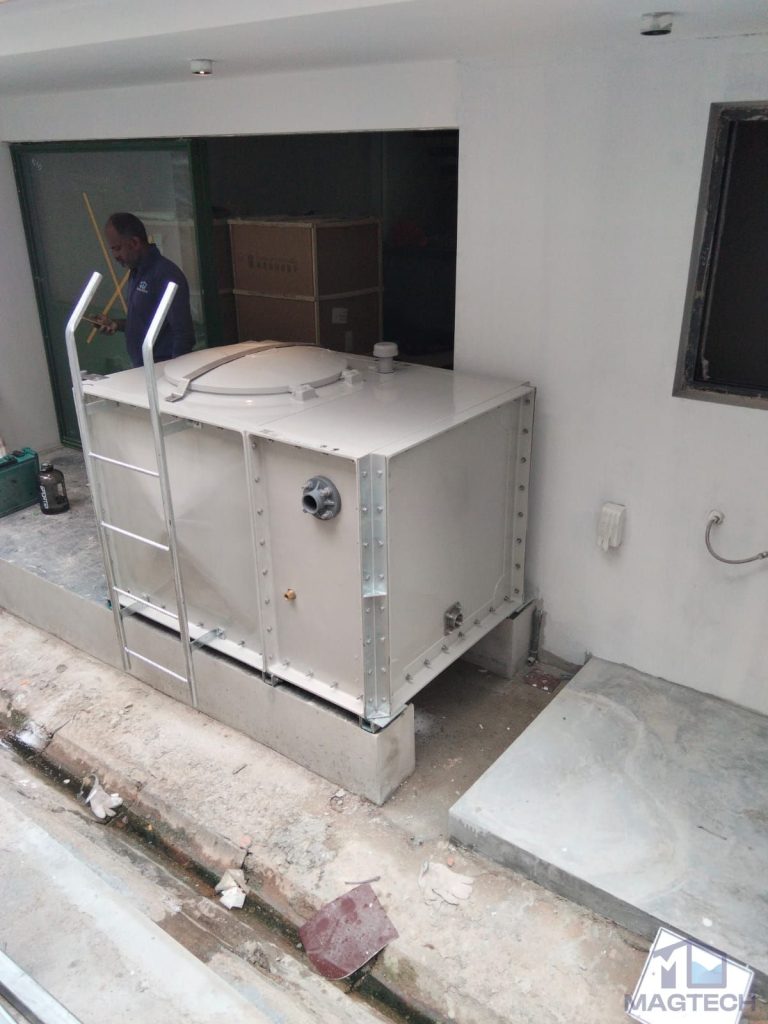
We supply, repair and replace sectional water tanks, and we have worked on tanks across Singapore since 1995. In our own work we rarely come across discoloured water. When the tank is the cause, it is usually an old steel tank at the end of its service life, and the answer is a repair or a replacement rather than another cleaning. Our guides to common tank repair issues and tank lifespan explain how to tell which.
If your water is regularly discoloured and the building has a tank, send us a photo of the tank and a description of when it happens. We will tell you honestly whether the tank looks like the cause.
Some households also fit a filter at the kitchen tap for peace of mind. PUB’s water does not need one to be safe, and PUB’s caution applies: a filter can become a breeding ground for bacteria if it is not cleaned or replaced regularly. We are preparing a small range of home water filters; leave your details below if you would like to hear when it is ready.
Recent Posts
COMING SOON
Water filter pre-launch
Receive an update when product details, availability and pricing are confirmed.
Be the first to know when the product is ready.
Tell us which format you are interested in. Your response will help Magtech plan the product range and launch information.
Product and launch updates
No purchase commitment
Clear information before release
REGISTER YOUR INTEREST
Tell us what you’re looking for
Complete the short form below so we can understand your requirements and contact you when the product is ready.
No payment required. We’ll only contact you regarding this product launch.
Water Quality & Filtration questions
Why is my tap water brown in Singapore?
PUB says the common cause is mineral sediment in the pipes being stirred up by a change in flow, for example during tank cleaning, flushing of service pipes or hydrant testing. Other causes PUB lists are a corroded storage water heater, corroded service pipes and fittings, stagnant water after a holiday, and a water mains leak.
How common is brown tap water in Singapore?
Uncommon. PUB says drinking water is normally clear but very occasionally may appear discoloured or contain particles. In 2023 PUB received about four cases of feedback a day on tap water quality of all kinds.
What should I do when my tap water is discoloured?
Follow PUB’s advice: run the taps and flush any water tank in your premises until the water runs clear, avoid using the water for laundry meanwhile, and call 1800-CALL-PUB if it has not cleared after 10 to 15 minutes.
Is brown tap water safe to drink?
PUB’s advice is to let the tap run until the water is clear before drinking it, and to call PUB if it does not clear. The WHO sets no health-based guideline value for iron because it is not of health concern at the levels found in drinking water.
Why is my tap water cloudy or milky?
PUB says that in rare instances dissolved air appears as tiny bubbles, making the water look milky. The bubbles disappear after a few minutes and the water is still safe for consumption.
Why does only my hot water run brown?
PUB lists corrosion of the iron tank in a storage-type water heater as a cause. If only the hot taps are affected, PUB says this could indicate a faulty heater or appliance.
Who is responsible for the water pipes in an HDB flat?
It is shared. PUB looks after its network, Town Councils maintain the tanks and pipes on common property, and homeowners maintain the pipes and fittings inside their own units.